- Nepal Adventure Trekking & Tour Operator


The Everest Base Camp Trek is not merely a hike; it is a dream adventure that takes you to the heart of the Himalayas. The journey traverses charming Sherpa villages adorned with prayer flags and ancient monasteries, as well as peaceful valleys and snow-capped peaks. Every step leads to a more profound understanding of the local culture and nature, as well as new perspectives of towering mountains. Arriving at the base camp at 5,364 meters, situated beneath the majestic Mount Everest (8,848.86 m), instills a profound sense of accomplishment. It is one of the most renowned and inspiring trekking experiences in the world.
The Everest Base Camp Trek commences with an exhilarating flight from Kathmandu to Lukla (2,860 m), where a diminutive aircraft soars between towering peaks before landing on one of the most dramatic airstrips in the world. The trail from Lukla traverses picturesque pine and rhododendron forests, swinging suspension bridges adorned with vibrant prayer flags, and welcoming Sherpa villages such as Namche Bazaar and Phakding.
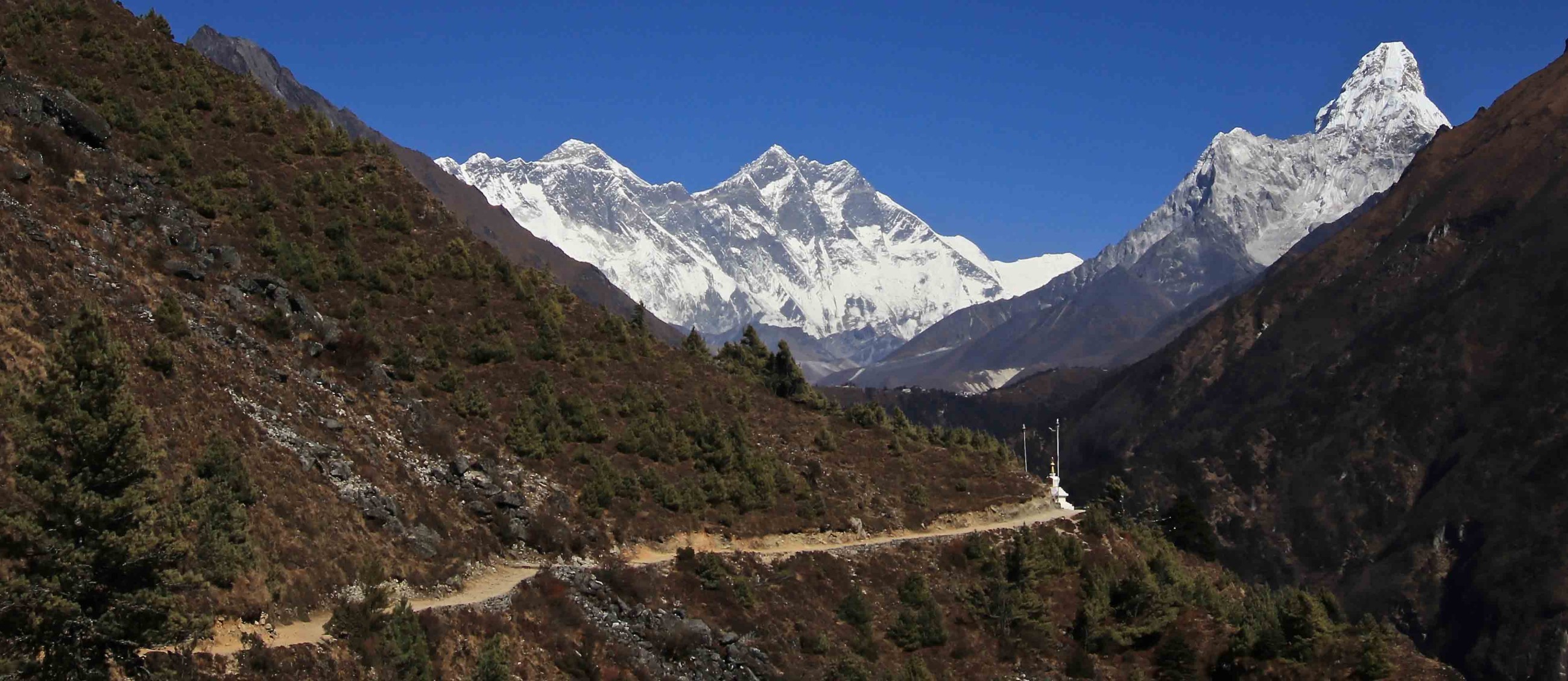
Namche Bazaar, also known as the "Gateway to Everest," is a vibrant mountain town that boasts spectacular views of the surrounding peaks, cozy teahouses, and bakeries. Trekking enthusiasts frequently spend a day here to acclimatize and appreciate their first clear view of Mount Everest in the distance. The first clear view of Mount Everest in the distance is often enjoyed by trekkers who spend a day here to acclimatize. The path ascends and leads to Tengboche, where the stunning Tengboche Monastery is situated, making it one of the most spiritual and scenic locations on the trek. It is a location where the gentle whisper of mountain winds blends with the chants of prayer, surrounded by mountains such as Ama Dablam and Thamserku.
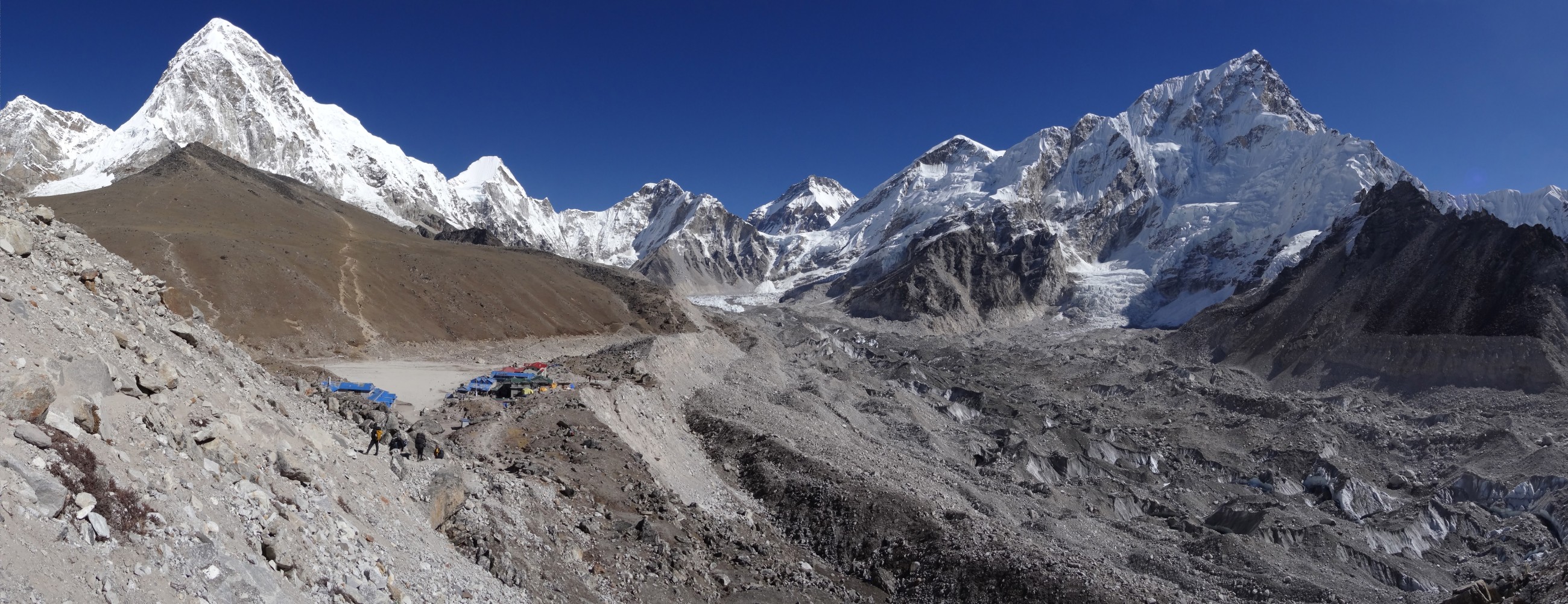
Trekkers gradually adjust to the thin mountain air as they pass through Dingboche and Lobuche, resulting in a more rugged and barren landscape at Tengboche. The final settlement before reaching the legendary Everest Base Camp (5,364 m) is Gorakshep. Surrounded by the mighty Khumbu Glacier, towering peaks, and massive ice walls, it is an unforgettable experience. Words are unable to fully capture the magnitude of this event.
Kala Patthar: The Ultimate Perspective Many trekkers consider the ascent to Kala Patthar (5,545 m) to be the highlight of their journey, which occurs early the following morning. The golden rays of sunrise illuminate Mount Everest in all its glory from this vantage point, a sight that will remain etched in memory forever.
The best time to trek to Everest Base Camp (EBC) largely depends on weather, crowd levels, and personal preference. Broadly, there are two ideal windows:
Pre-Monsoon (Spring)—March to May
Post-Monsoon (Autumn)—Late September to November
Less Ideal Seasons
The Everest Base Camp (EBC) Trek is regarded as having a difficulty level that ranges from moderate to challenging. It is not a technical climb; however, the difficulty arises from factors such as altitude, terrain, and duration. Here’s a detailed breakdown:
Altitude
Terrain
Duration & Distance
Physical fitness is required.
Mental Challenge
Difficulty Summary
|
Aspect |
Level |
|
Altitude |
High (risk of AMS) |
|
Trail Difficulty |
Moderate |
|
Daily Walking |
Moderate-High |
|
Overall fitness is needed. |
Moderate-High |
|
Technical Skills |
None (non-technical trek) |
The Everest Base Camp Trek is suitable for individuals who are reasonably fit, can walk for 5 to 6 hours each day, and are willing to acclimatize. The trek emphasizes endurance and altitude management rather than technical climbing skills.
To trek to Everest Base Camp (EBC), you will need to obtain two essential permits:
Sagarmatha National Park Entry Permit
Purpose: This permit grants access to Sagarmatha National Park, a UNESCO World Heritage Site that includes Everest Base Camp (EBC).
Cost:
Where to Obtain:
Documents Needed:
Khumbu Pasang Lhamu Rural Municipality Entry Permit
Purpose: This permit supports local development and infrastructure in the Khumbu region.
Cost:
Where to Obtain:
Documents Needed:
Additional Information
Local families own and operate the teahouses, which serve as the primary accommodations along the Everest Base Camp Trek. These cozy lodges offer a warm and inviting environment for relaxation after a long day on the trail. The rooms are typically simple, featuring basic bedding and offering either shared or private bathrooms depending on the location. The amenities are more basic at higher altitudes, but the breathtaking views and welcoming service more than compensate for this.
Trekkers are provided with hearty and filling meals designed to maintain their energy levels. A dal bhat, which is a lentil soup served with rice and vegetables, along with momos (dumplings) and other soups, is one of the traditional Nepali dishes that are readily available. Most teahouses offer continental options such as omelets, pasta, and noodles for trekkers who are yearning for familiar flavors. Breakfast is typically included in the price of your stay, while lunch and dinner must be ordered à la carte.
Hot showers are frequently available in larger villages, including Namche Bazaar, Tengboche, and Dingboche, for a nominal fee. During cold mornings or snowy days, trekkers can find various local snacks, as well as coffee and tea, along the trail, which provide much-needed warmth.
Trekking enthusiasts can experience Sherpa hospitality, interact with locals, and appreciate the distinctive charm of each mountain village by staying in teahouses that provide comfort. The trek is both memorable and comfortable due to the stunning Himalayan scenery, nourishing meals, and simple lodging.
The Everest Base Camp Trek is not just about reaching a destination; it emphasizes the cherished moments that occur during the journey. New emotions, sounds, and sights are introduced with each step. You will experience the gentle jingle of yak bells echoing through deep valleys, share laughter with fellow trekkers, and feel the cool mountain breeze carry the scent of pine and earth. The moment when Mount Everest first appears on the horizon, shining above the clouds, is truly magical. This journey is truly transformative because of the experiences it offers, including the beauty you observe, the challenges you surmount, and the people you encounter. The Everest Base Camp Trek is more than just a trek; it represents a journey that combines personal achievement, cultural experiences, and adventure. Adventurers from all over the globe must undertake this iconic journey for the following reasons:
The Everest Base Camp Trek is the quintessential Himalayan adventure. This legendary trek takes you through the heart of the Sherpa's sacred Khumbu Valley, passing by towering icefalls and into the shadow of the world's highest peaks. It is more than a journey; it is a pilgrimage that cultivates resilience, reveals profound cultural diversity, and concludes with a personal victory that will forever redefine your boundaries.
various government, non government and tourism related organizations.


