• Nepal Adventure Trekking & Tour Operator

Upper Dolpa Trek

Activities
Trekking

Upper Dolpa to Jomsom Trek 

The Upper Dolpa Trek, also known as the "Upper Dolpo Trek," "Dolpa Trek," or "Upper Dolpa Circuit Trek," is a spectacular adventure in western Nepal. This high-altitude trek crosses rugged terrain, challenging mountain passes, and pristine valleys, offering stunning views of snow-capped peaks and crystal-clear lakes. Along the route, trekkers can explore ancient monasteries and traditional villages, experiencing the rich culture and resilient communities of the Dolpo region. 

The Upper Dolpa Trek is a remote and off-the-beaten-path adventure in western Nepal, located within Shey Phoksundo National Park—one of the country’s most pristine and untouched regions. This hidden Himalayan gem offers dramatic landscapes, including high mountain passes, turquoise lakes, rugged valleys, and crystal-clear streams. Ideal for trekkers seeking solitude, the region provides an authentic escape far from crowded trekking routes, with breathtaking views and unspoiled natural beauty at every step.

Upper Dolpa, rich in culture and history, is home to ancient monasteries, traditional Tibetan-influenced villages, and a lifestyle that has remained unchanged for centuries. Trekkers can explore iconic settlements such as Saldang, Dho Tarap, and Ringmo, where local communities preserve their unique customs and spiritual traditions. The journey also includes a visit to the sacred Shey Gompa, which is famously featured in "The Snow Leopard" and offers profound insights into Himalayan Buddhism and spiritual life.

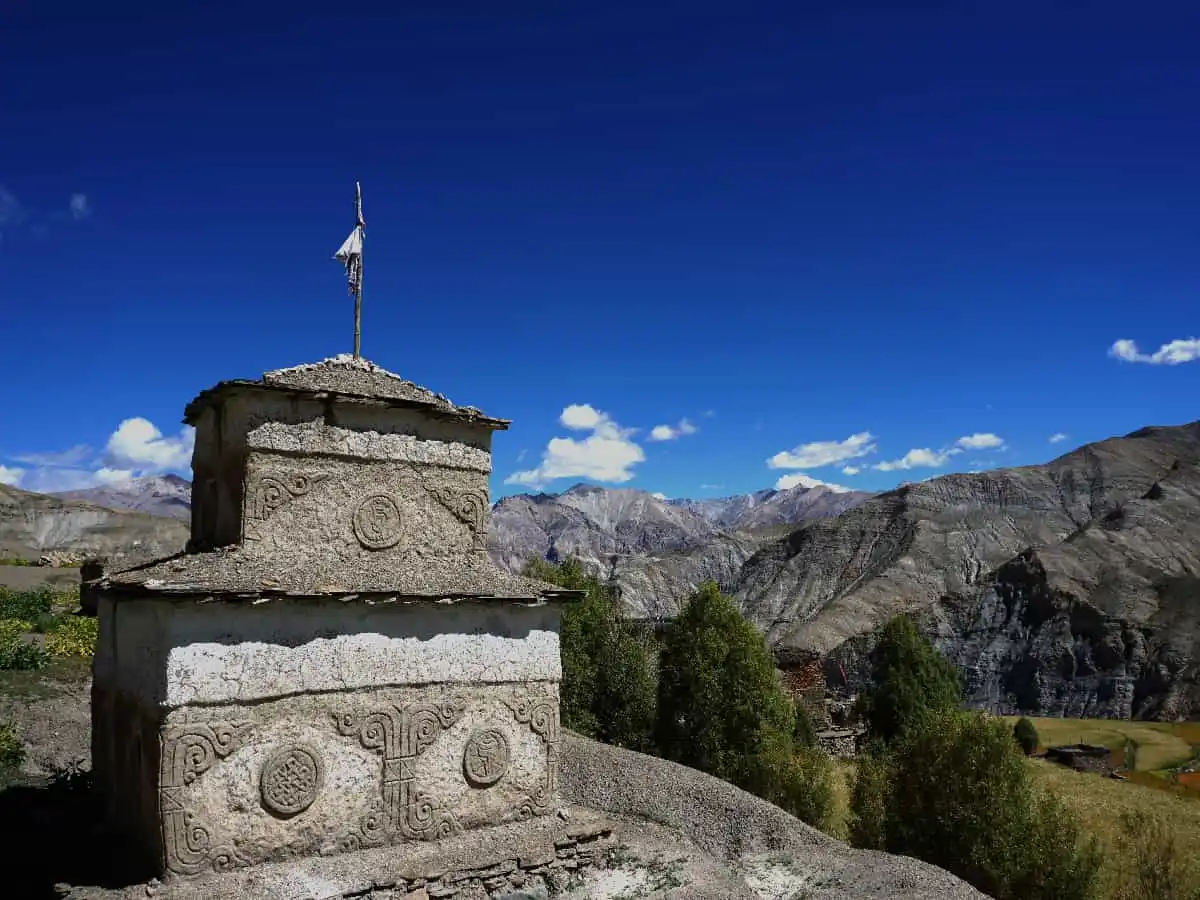
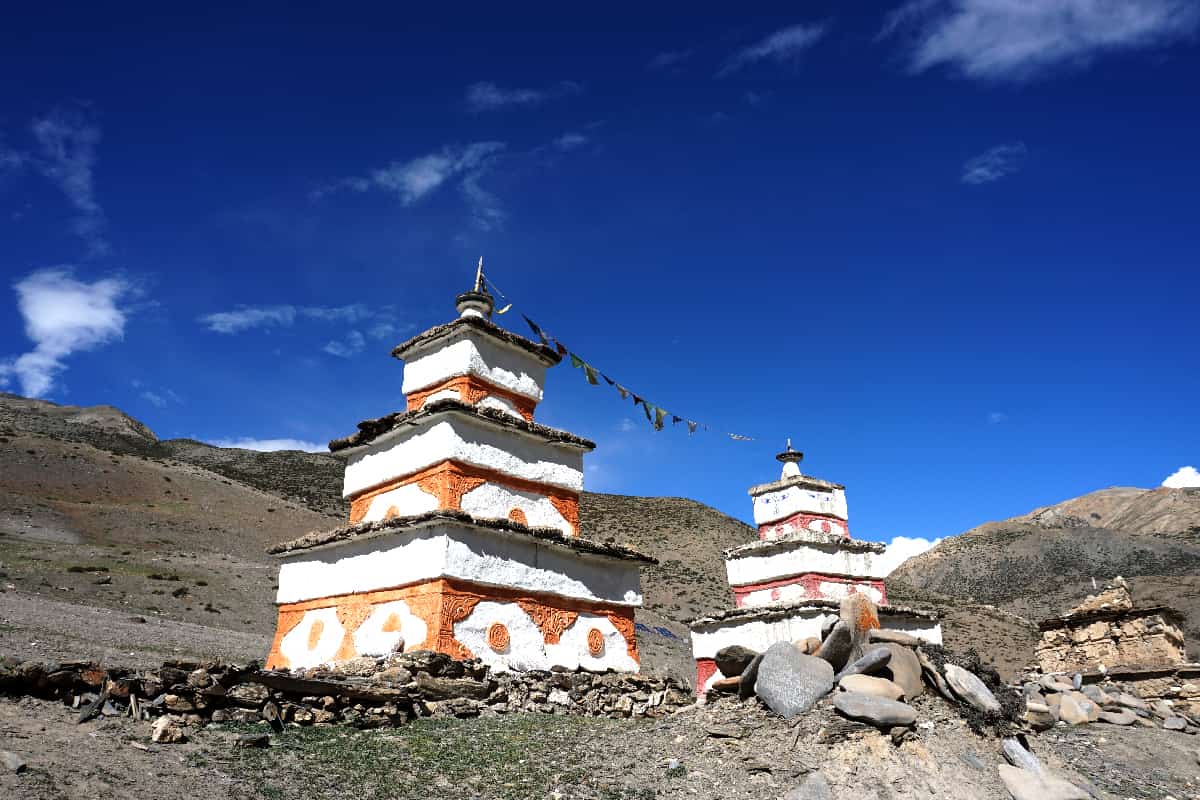
The Upper Dolpa Trek is renowned for its strong Buddhist heritage, with over 130 monasteries scattered across the region. These centuries-old gompas in villages such as Saldang, Chharka, and Bhijer showcase ancient architecture, prayer rituals, and vibrant cultural practices. Along the trail, colorful prayer flags, mani walls, and chortens reflect the deep-rooted spiritual connection of the local people to their land and beliefs.

The Dolpa region is beautifully influenced by both Buddhism and Hinduism, creating a harmonious blend of traditions. Villages such as Tarakot and Dho Tarap reflect this cultural synergy through their shared festivals, rituals, and daily practices. This unique combination of spirituality enhances the trekking experience, transforming it into not just a physical journey but also a cultural and spiritual exploration.

The Upper Dolpa Trek is more than just a high-altitude adventure—it is a transformative journey through one of Nepal’s most isolated and culturally rich regions. From crossing challenging mountain passes to exploring ancient monasteries and witnessing untouched wilderness, this trek offers a rare opportunity to connect with nature, tradition, and inner peace in the heart of the Himalayas.

Upper Dolpa Trek

Upper Dolpa Trek Highlights

Region

Dolpa

Duration

29 Days

Starting Price

USD 4,500.00

Group Size

7 Plus

Activities

Trekking

Transportation

Domestic flight

Accommodation

Hotel, Lodge and Tent

Meal Plan

Full Camping

Trip Grade

Strenuous

Max. Altitude

5,515m

Best Season

Spring, Summer and Autumn

Trip Hours/Day

5-10 Hours

Competency

Physically Fit


Trip Itinerary

  • 01

    Arrival at Kathmandu (1,300m).

    When you arrive at the airport, our company representative will greet you warmly and ensure a smooth transfer to the hotel. At the hotel, you will have the opportunity to meet our team. We plan to hold a pre-trek briefing in the evening, between 6:00 and 7:00 p.m. This gathering is an excellent opportunity to become acquainted with the other members of your group before we all proceed to enjoy a delicious dinner. During the welcome dinner, you will be able to taste authentic Nepalese cuisine and watch captivating cultural dance performances, immersing you in Nepal's rich cultural traditions.

    Transfer: 30-45 min | Accommodation: Hotel | Meal: Welcome Dinner
  • 02

    Full day Guided Tour in Kathmandu valley with City Tour Guide

    Today, you will have the opportunity to explore Kathmandu with our experienced city tour guide. Our itinerary includes several remarkable sites:

    • SWOYAMBHUNATH, also known as the Monkey Temple, is perched atop a hill and can be reached by climbing a long set of steps. From there, you can enjoy breathtaking panoramic views of Kathmandu.
    • BOUDHANATH STUPA is adorned with traditional Gompas adorned with vibrant prayer flags. It serves as a focal point for Sherpas and Tibetans who partake in the spiritual practice of circumambulating the stupa (koras).
    • PASHUPATINATH, a sacred Hindu temple, is situated on the banks of the Bagmati River and features Ghats where cremation ceremonies take place, offering a unique glimpse into Hindu rituals.
    • KATHMANDU DURBAR SQUARE, one of the ancient capitals of the Kathmandu Valley, is a UNESCO World Heritage Site. This vibrant square showcases a harmonious fusion of Hindu and Buddhist temples, showcasing the rich cultural heritage of the region.

    With our knowledgeable guide, you will learn about the historical, religious, and architectural significance of these iconic landmarks. Get ready to be enthralled by the distinct charm and spiritual atmosphere of Kathmandu.

    Sightseeing: 7-8 Hours | Accommodation: Hotel | Meal: Breakfast
  • 03

    By Domestic Plane: Kathmandu to Nepalgunj (150m)

    After breakfast in Kathmandu, you will transfer to Tribhuvan International Airport for your domestic flight to Nepalgunj (KEP), the main gateway to Bardia National Park, Dolpo treks, and trips toward Mt. Kailash. The flight, operated by airlines like Buddha Air, Yeti Airlines, and Shree Airlines, takes about 50–60 minutes, with 8–10 flights daily. For the best Himalayan views, sit on the right side of the plane to see the Dhaulagiri and Annapurna mountains on clear days. After arriving at Nepalgunj Airport (Ranjha Airport), about 6 km from the city center, you will be transferred to your hotel by taxi or rickshaw. Nepalgunj is hotter and more humid than Kathmandu, so air-conditioned transport and accommodations are provided, especially from April to October. If you have free time in the evening, a quick rickshaw ride to Bageshwori Temple is a great way to experience the local culture.

    Transfer: 25-30 min | Flight: 50-60 min | Accommodation: Hotel | Meal: Breakfast, Lunch, Dinner
  • 04

    By Domestic Plane: Nepalgunj to Juphal (2450m). Trek to Dunai (2,090m)

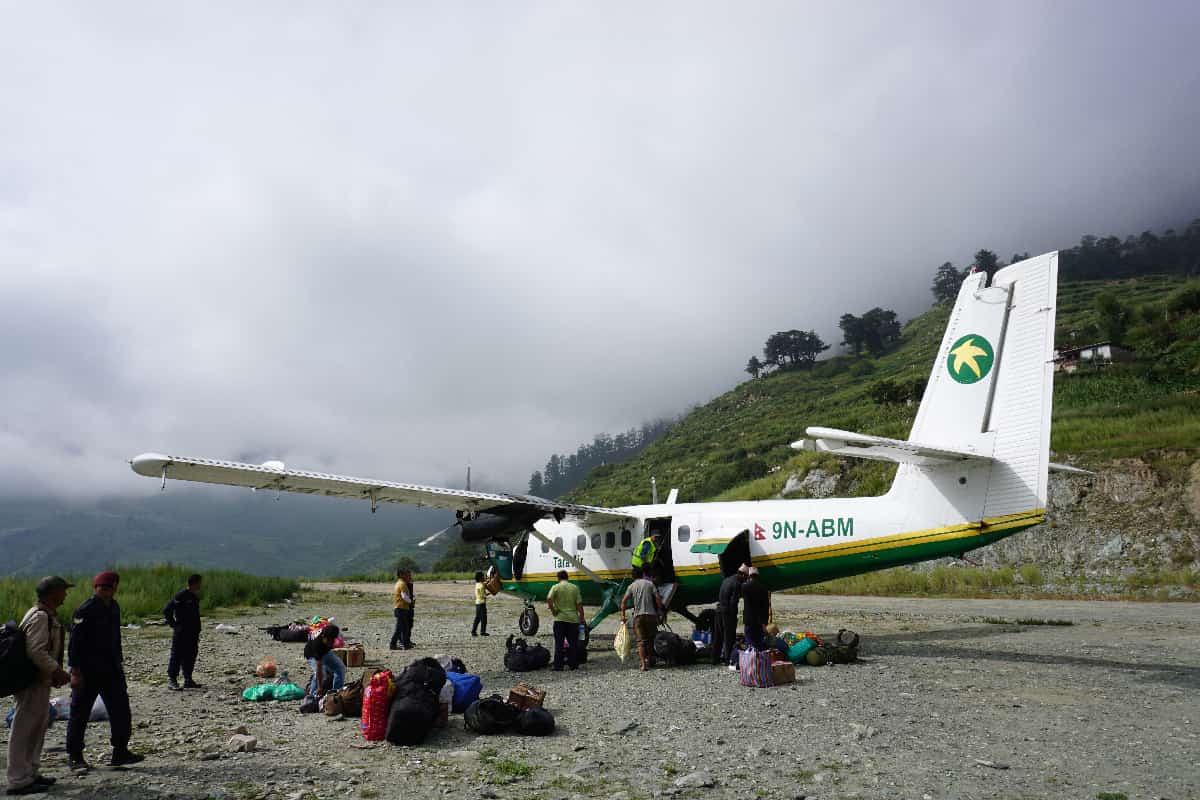
    After an early breakfast, you will go to the airport for your morning flight to Juphal. The flight from Nepalgunj (KEP) to Juphal (VND) is the main way to reach the Dolpa region and is operated by Tara Air and Summit Air using small Twin Otter or Dornier aircraft. The flight takes about 35–45 minutes and usually departs between 6:00 AM and 9:00 AM, as mountain winds can make flying unsafe later in the day. Baggage limits are strict—10 kg for checked luggage and 5 kg for carry-on. As you take off, the flat Terai plains quickly give way to deep river valleys and snow-covered mountains. Sit on the left side of the plane for the best views. Juphal Airport, at 2,450 m, is a high mountain airstrip with a steep landing, making for an exciting mountain flying experience. On this short flight, you can enjoy beautiful views of the Himalayan foothills and the majestic peaks to the north.

    Upon arrival in Juphal (2,450 m), you will notice the cooler temperature and thinner mountain air as you prepare your gear and make final arrangements for the trek. Juphal is the entry point for Shey Phoksundo National Park, so you will show your trekking and park permits at the police checkpoint near the airstrip. If you haven’t arranged a crew in advance, this is also where you will meet your porters or mule caravan leaders. The trek begins from Juphal to Dunai (2,140 m), descending through terraced fields, small villages like Roopghar, and along the turquoise Thuli Bheri River over a relatively flat, dusty trail. The journey takes about 3–4 hours and covers around 10 km, making it a gentle first day to warm up and acclimatize. As you approach Dunai, the valley widens, and you cross a large suspension bridge to reach the town, the administrative center of Dolpa. Dunai has more facilities than the remote villages ahead, with tea houses and lodges, some solar-powered charging, and hot showers for a fee. It is also the last chance to visit a pharmacy, use an ATM, or buy trekking supplies. After arriving, you will have free time to explore the village and enjoy the local way of life and the surrounding natural beauty.

    Flight: 35-45 min | Trekking: 3-4 Hours | Distance: 10 km | Altitude Gain: 150 m  | Altitude Loss: 530 m l Accommodation: Lodge l Meal: Breakfast, Lunch, Dinner
  • 05

    Dunai to Chhekpa (2,660m)

    After breakfast in Dunai, the trek to Chhekpa (2,670 m) begins by heading west along the riverbank toward the confluence of the Thuli Bheri and Phoksundo Khola, reaching Sulighat, the official entrance to Shey Phoksundo National Park, in about 45–60 minutes. Here, you will register your National Park permit and Restricted Area Permits (RAPs) before continuing north along the emerald-green Phoksundo Khola, following trails carved into the hills with short climbs and descents. The trail passes through forests of Kageni and Shangta, with large walnut trees, Himalayan cedar, and bamboo groves, where you might see Langur monkeys or the Impeyan Pheasant (Danphe). Small settlements like Kageni are perfect for tea breaks, and the path crosses several suspension bridges over whitewater rapids. At the intersection of Phoksundo and Maiba Khola, you will cross a bridge near Phoksundo Lake before the final two-hour climb to Chhekpa on stone-paved steps. Chhekpa is a quiet, forested village with basic stone-and-timber tea houses, simple rooms, and common bathrooms. Be careful of mule trains using this route—always step to the hillside when you hear their bells.

    Trekking: 5-6 Hours | Distance: 15 km    | Altitude Gain: 740 m    | Altitude Loss: 160 m l Accommodation: Lodge l Meal: Breakfast, Lunch, Dinner
  • 06

    Chhepka to Amchi Hospital (3,110m)

    After breakfast in Chhekpa, the trek follows the Phoksundo Khola, passing through forests of Himalayan blue pine, spruce, and silver fir. In spring, rhododendrons bloom in pink and red, while autumn brings golden birch and walnut leaves. About halfway, you reach the small settlement of Rechi (2,940 m), a common lunch spot, crossing the river on sturdy suspension bridges as the valley begins to widen. The trail switches back and forth between the two sides of the valley, sometimes walking alongside the river and other times on narrow paths above the gorge. Further up, the valley opens more as the trail passes through birch, larch, horse chestnut, and pockets of bamboo forests. Soon, you reach the confluence of the Phoksundo and Pungmo Khola. Your route continues north along Phoksundo Khola to a bridge leading to Amchi Hospital (3,110 m), a community center for traditional Tibetan medicine. Here, Amchis use local herbs to treat ailments, and visitors can see herbs being dried and processed. The hospital area is surrounded by towering cliffs and is a great acclimatization stop before the final push to Ringmo and Phoksundo Lake. If you have extra energy, a short hike leads to the Jharana Viewpoint, offering views of Phoksundo Waterfall, one of Nepal’s highest at 167 m. Keep an eye out for wildlife along the way, including Blue Sheep (Bharal), Musk Deer, and birds such as the Blood Pheasant and Himalayan Griffon. Traditional Tibetan medicine, or Amchi, is designed for the unique climate and culture of the region, making this stop both fascinating and educational as you continue your scenic trek toward the lake.

    Trekking: 5-6 Hours | Distance: 14 km    | Altitude Gain: 600 m | Altitude Loss: 130 m l Accommodation: Lodge l Meal: Breakfast, Lunch, Dinner
  • 07

    Amchi Hospital to Ringmo (3,630m)

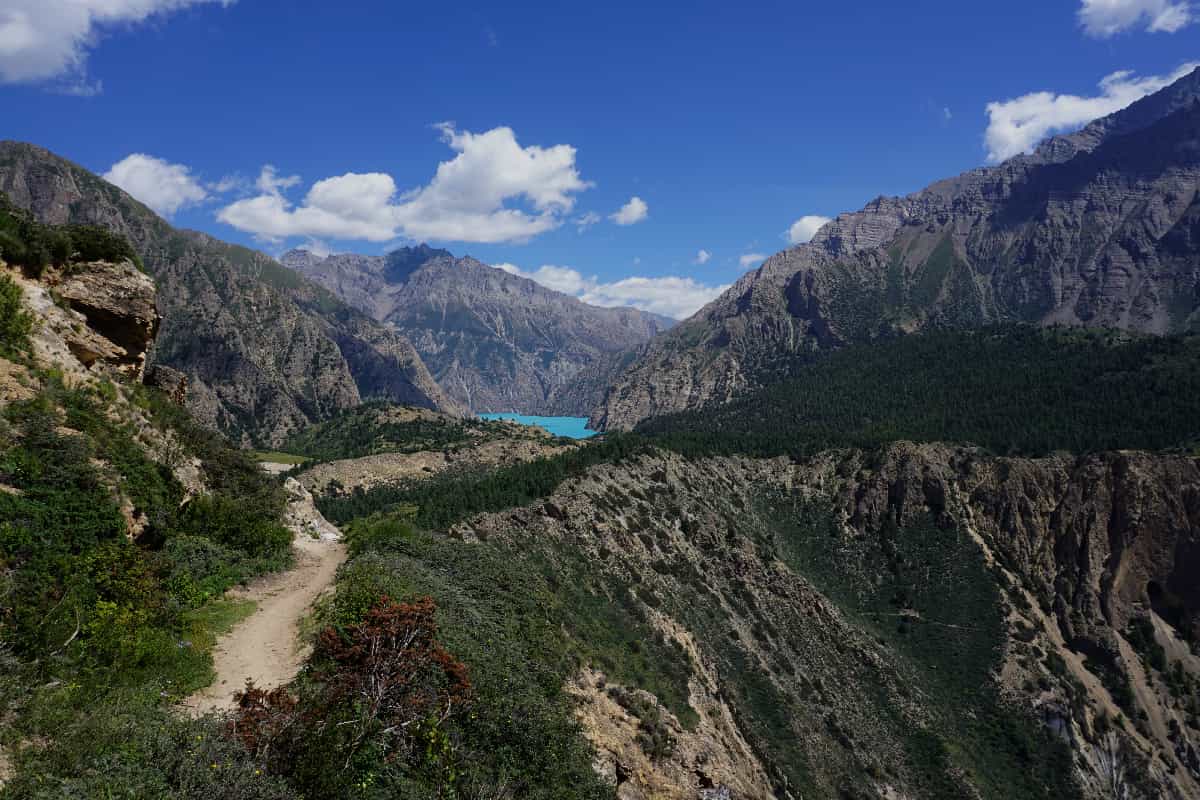
    After breakfast at Amchi Hospital, the trek begins with a gentle walk through a dense forest of Himalayan cedar, crossing the Phoksundo Khola to reach the small winter settlement of Palam (3,260 m), where a National Park checkpoint may require permit registration. From Palam, the trail climbs steeply along dusty switchbacks to a ridge at around 3,700–3,875 m, offering stunning views of Phoksundo Waterfall, the tallest in Nepal at 167 m, and a first glimpse of the turquoise Phoksundo Lake, framed by the snow-capped Kanjirowa peaks. After the ridge, the trail descends through magical forests of birch and blue pine, passing a gateway chorten, before arriving at Ringmo Village (3,640 m), a traditional Bön settlement with flat-roofed stone houses, ancient mani walls, and mud-painted chortens. The village now benefits from solar panels, improving daily life for locals. Ringmo offers tea houses and a National Park camping area on the serene lakeshore. From here, it’s a short walk to set up camp on the shores of Phoksundo Lake, the deepest lake in Nepal, surrounded by spectacular alpine scenery. For this trek, it’s best to start early, around 7:30–8:00 AM, to avoid the midday sun on the switchbacks, pace yourself on the steep climbs to acclimatize, and take in the breathtaking views along the Himalaya trail, where careful footing is needed, but the rewards include some of the most beautiful scenery in the region.

    Trekking: 4-5 hours | Distance: 6 km | Altitude Gain: 600 m  | Altitude Loss: 110 m l Accommodation: Lodge l Meal: Breakfast, Lunch, Dinner
  • 08

    Acclimatization day

    After breakfast in Ringmo, the day begins with a mini-trek along the eastern shore of Phoksundo Lake, following a cliffside trail featured in Eric Valli’s film Himalaya with dizzying views of the lake, which is nearly 145 m deep. You visit Tshowa Gompa, a 900-year-old Bön monastery perched above the turquoise water, where you can circumambulate the mani walls, see ancient murals, statues of Tonpa Shenrab, and centuries-old butter lamps, and enjoy a quiet meditation spot overlooking the lake. In the afternoon, return to Ringmo for lunch, and explore the village with its flat-roofed stone houses, intricately carved window frames, and surrounding chortens, including the historic Kani Chorten. You can meet locals weaving wool rugs, spinning yak hair, or preparing mule caravans for Upper Dolpo, and greet them with a friendly Tashi Delek. For those feeling energetic, an optional trek toward the Kanjirowa Basecamp offers light acclimatization through birch and blue pine forests with views of Kanjirowa Himal (6,883 m). In the evening, step outside to enjoy stargazing over the lake, with the Milky Way shining brilliantly in the clear, high-altitude sky, setting a peaceful and reflective end to the day.

    Accommodation: Lodge l Meal: Breakfast, Lunch, Dinner
  • 09

    Ringmo to Forest Camp (3,680m)

    Leaving Ringmo, the trek follows the western shore of Phoksundo Lake along a narrow cliffside trail famously shown in the film Himalaya. The path has steep drops into the deep sapphire water, so if you meet a mule train, always step onto the mountainside for safety. Looking back toward Ringmo and the waterfall provides an iconic view, with the lake changing color from turquoise to deep purple. After the cliff section, the trail turns away from the lake and climbs steeply to a ridge at 4,050 m, passing rugged rocks and alpine scrub, with sweeping views of the arid valleys toward the Tibetan border and the Kanjirowa Himal peaks. From the ridge, the trail descends through birch and blue pine forests to the wide gravel floodplain of the Phoksundo Khola, where walking is easier, though small stream crossings may be needed. The day ends at Forest Camp (Sallaghari), a quiet campsite among tall pine trees with the sound of the river in the background. It can be colder and damper than Ringmo, and the area is good for spotting Blue Sheep or even the elusive Snow Leopard at dusk.

    Today, we enter Upper Dolpo, a region requiring a special permit. The trail, often called the “Devil’s Trail,” is narrow and dramatic, offering an unforgettable trekking experience. Immortalized by Thinle in Eric Valli’s film Himalayan Caravan, the path winds around the western edge of Phoksundo Lake. Rising to a ridge, it provides spectacular views of the azure lake, Ringmo village, and towering peaks such as Norbung Kang (6,085 m), Kanjiroba (6,612 m), and Jhyarko Dingla (5,892 m). From the ridge, the trail descends gently through birch forests, leading to a peaceful campsite tucked away on the northern edge of Phoksundo Lake, where we will rest and prepare for the next day’s adventure.

    Trekking: 4-6 hours | Distance: 10 km | Altitude Gain: 510 m | Altitude Loss: 490 m l Accommodation: Tent l Meal: Breakfast, Lunch, Dinner
  • 10

    Forest Camp to Kangla Phedi (4,530 m)

    After breakfast in Forest Camp, the day begins with a gentle walk through thinning blue pine and birch forests, which gradually give way to stunted trees, hardy alpine shrubs, and juniper as you follow the wide, braided floodplain of the Phoksundo Khola. Depending on the season, you may need to cross several cold, glacial streams, so waterproof boots or sandals are recommended. The trail climbs steeply along the western wall of a high canyon, called the climb into the clouds, where twisted sedimentary rocks tell the story of the ancient Tethys Sea. As the canyon opens, you reach high alpine meadows where Blue Sheep (Bharal) graze, and Snow Leopards roam in the quiet valley. The day’s trek takes you to Kang La Phedi (4,530 m), a wind-swept high camp with only tents, a kitchen, and a dining area, offering views of the V-shaped Kang La pass and towering peaks. After breaking camp, you walk through a broad valley with streams flowing into the Phoksundo Khola and reach Chunemba Camp after about two hours through birch and pine forests, an area famous for Cordyceps sinensis (Yarcha Gompa). The trail continues past Lar Tsa Camp, providing stunning views of Kanjiroba Himal (6,612 m), crosses rivers on sturdy bridges, and climbs narrow rocky slopes to a crest before descending to Snowfields Camp, a tranquil spot beside the river made famous by Peter Matthiessen’s book The Snow Leopard. Along the way, you can admire azalea and juniper trees while enjoying the wild, untouched beauty of Upper Dolpa.

    Trekking: 6-7 hours | Distance: 12 km | Altitude Gain: 870 m    | Altitude Loss: 240 m l Accommodation: Tent l Meal: Breakfast, Lunch, Dinner
  • 11

    Cross Kang La Pass (5,380m). Trek to Shey Gompa (4,16m)

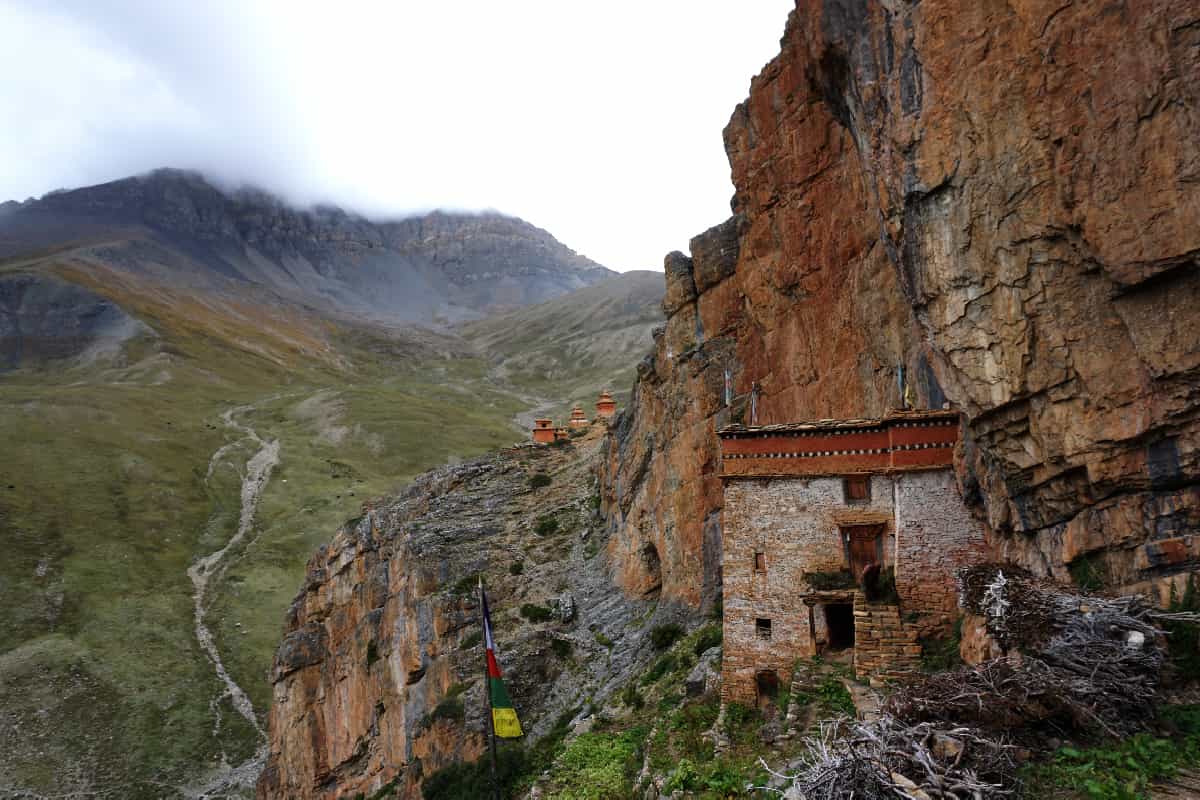
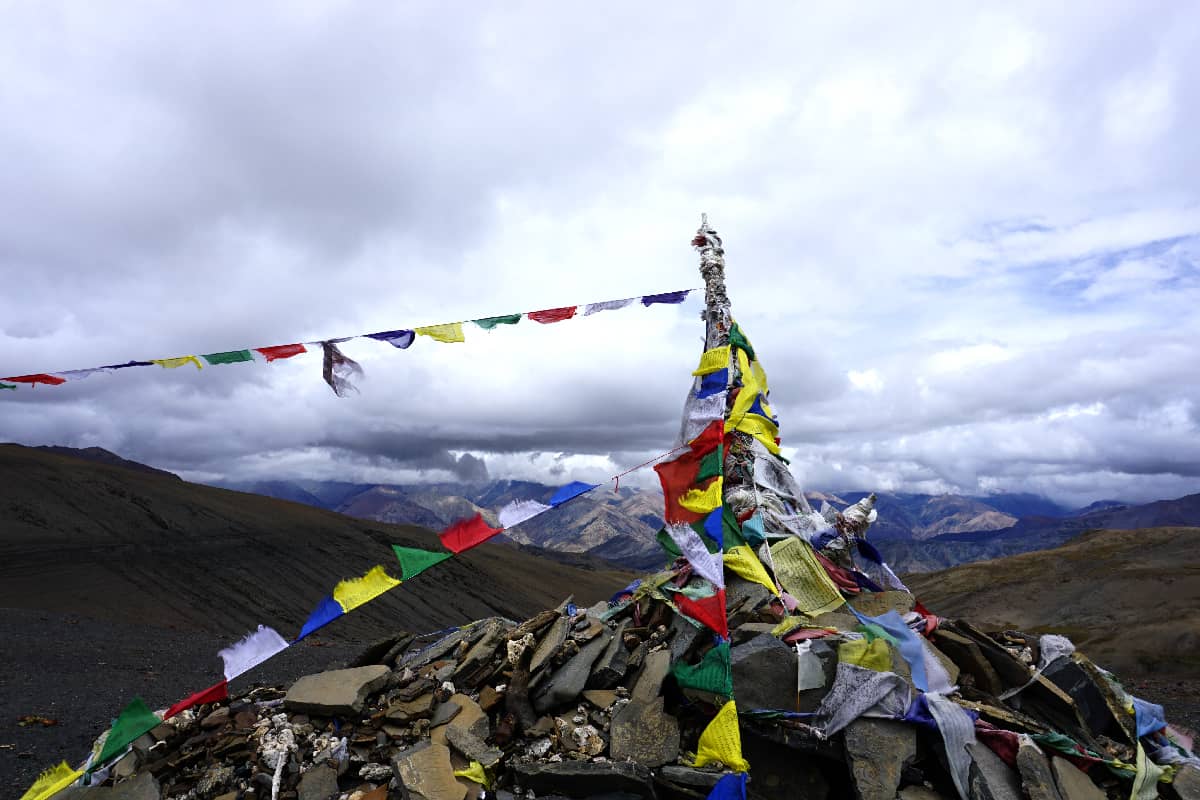
    The day starts very early, around 4:00 AM, to reach Kang La Pass (5,380 m) before the strong midday winds. From Kang La Phedi (High Camp), the trail climbs steeply on loose scree and moraine, often requiring short rests as the thin air makes breathing difficult. The final 200 meters to the prayer-flag-covered pass can be icy or snowy depending on the season, so microspikes and trekking poles are recommended. At the summit, you are rewarded with stunning views of the Phoksundo valleys, the Dhaulagiri range to the east, the Tibetan mountains to the north, and the famous Shey Shel Sumdo (Crystal Mountain). Tradition calls for adding a stone to the cairn and shouting Lha Gyalo! in celebration. The descent is steep at first, sliding down scree toward the Hubajung Khola, then along a narrowing gorge with striking orange stratified rocks. After about an hour, you pass a long mani wall and finally spot Shey Gompa (4,160 m) across the valley. The 11th-century Kagyu monastery sits at the river junction beneath Crystal Mountain, which is revered as the younger sibling of Mount Kailash, and pilgrims perform a 12-hour kora around it twice a year. There are no lodges here, so you camp on grassy meadows near the gompa, surrounded by a few herders’ huts, experiencing the simple, timeless life of the resident monks and locals.

    Trekking: 6-8 hours | Distance: 12 km | Altitude Gain: 750 m    | Altitude Loss: 1,050 m l Accommodation: Tent l Meal: Breakfast, Lunch, Dinner
  • 12

    Acclimatization day

    In the morning, explore Shey Gompa, a Kagyu sect monastery famously linked to the Tibetan teacher Singye Yeshe, who is said to have flown to Dolpo on a snow lion. Inside, you’ll see a massive copper-gilt Shakyamuni Buddha, soot-darkened murals, and the scent of ancient butter lamps and juniper. The monastery houses centuries-old Tibetan scrolls and woodblock prints, and red cliffs around the gompa feature small meditation cells where monks retreat for years of silence. For active acclimatization, you can perform a partial or full kora (circumambulation) of Crystal Mountain, known for its white quartz and fossil veins from the ancient Tethys Sea. Most trekkers do a half-Kora, heading toward Tsakang Gompa, perched on a vertical red cliff with bird’s-eye views of Shey Valley, the rivers, and potential sightings of Blue Sheep or Snow Leopards. In the afternoon, reflect on the monastery’s history and its fame from Peter Matthiessen’s The Snow Leopard, reading a few chapters while observing the resident families at work—grinding tsampa, milking yaks, or drying fuel—giving a rare glimpse into a lifestyle that has remained largely unchanged for a millennium.

    Accommodation: Tent l Meal: Breakfast, Lunch, Dinner
  • 13

    Cross Saldang La Pass (5,060m). Trek to Namgung (4,430m)

    The day begins early in the crisp, thin air of Shey Gompa (4,343m), as the trail heads north on a steady and demanding climb toward Saldang La (5,060m). Leaving behind the green valley of the Sephu Khola, the landscape quickly changes into barren, ochre-colored slopes with very little vegetation, where only alpine shrubs and lichens survive. Although the path is clear, the high altitude makes the ascent physically challenging, requiring a slow and steady pace with controlled breathing. Upon reaching the prayer-flag-covered summit of Saldang La, trekkers are rewarded with stunning views of the vast Tibetan Plateau to the north and the snow-capped peaks of the Kanjirowa Himal to the south. After enjoying the pass, the trail descends gradually into the remote Namgung Valley, passing through dusty trails and colorful canyon walls with shades of purple, orange, and grey. Along the way, trekkers may encounter Tibetan nomads (Drokpa) grazing yaks and sheep in this isolated region. After several hours of descent, the small green settlement of Namgung appears dramatically against the dry landscape. Built along a steep gorge, Namgung village is centered around its ancient monastery, which is partly carved into red cliffs and decorated with old frescoes. The local people live a traditional lifestyle, practicing high-altitude farming on narrow terraces where barley and buckwheat are grown, reflecting their resilience and deep cultural roots.

    Trekking: 6-7 Hours | Distance: 13 km | Altitude Gain: 760 m  | Altitude Loss: 690 m l Accommodation: Tent l Meal: Breakfast/Lunch/Dinner
  • 14

    Namgung to Tora Sumda (3,743m)

    The day starts near Namgung Monastery, which is built into a cliff. After a cup of tea, you begin walking uphill out of the Namgung valley. The climb is steady, and as you go higher, you can see wide, open views of Upper Dolpo with almost no trees. Once you reach the top, the trail becomes more gentle and follows a high ridge, giving you amazing views down to the Nagon Khola far below. As you continue, you will finally see Saldang, a large village with white stone houses and big fields of barley and buckwheat. After exploring Saldang and having lunch, you continue your walk along the Nagon Khola. The trail is easier in the afternoon, mostly flat, but the sun can feel strong. Along the way, you pass small settlements and mani walls, with dry landscapes, cliffs, and unique rock formations all around. This area lies in the rain shadow of the Himalayas, so it is very dry with little vegetation. By the end of the day, you reach Tora Sumda, where two rivers meet. It is a quiet and peaceful camping place, once used by salt traders, surrounded by high barren hills that glow beautifully in the evening light.

    Trekking: 6-8 Hours | Distance: 16 km | Altitude Gain: 270 m    | Altitude Loss: 930 m l Accommodation: Tent l Meal: Breakfast, Lunch, Dinner
  • 15

    Tora Sumda to Musi Gaon (4,100m)

    Starting from Tora Sumda, you walk north along the Nagon Khola on a mostly gentle trail, though the thin air and rocky paths make it tiring. As you go further, the valley becomes wider and the mountains look more rounded and worn, with beautiful layers of rock in colors like red, grey, and brown. After some time, you reach Yanjer Gompa, an important old monastery built in the 16th century on a small flat area above the river. It is a peaceful and spiritual place, known for its ancient paintings, statues, and old Buddhist scriptures. In the past, this was also an important stop for salt trade caravans coming from Tibet, and the quiet atmosphere here feels very special. After leaving Yanjer, the trail becomes a bit harder as you climb steadily toward Musi Gaon, moving away from the main river valley. Along the way, you may see Drokpa nomads living in black tents and herding yaks, especially in summer. The path can be narrow and rough in places, and strong afternoon winds can make the walk more challenging. Finally, you reach Musi Gaon (4,100 meters), one of the northernmost villages in Nepal. It is a small settlement of stone houses where people live simple lives, growing barley in small fields. The village feels very remote and untouched, giving you a strong sense of being far away from the modern world.

    Trekking: 5-7 Hours | Distance: 14 km | Altitude Gain: 300 m  | Altitude Loss: 430 m l Accommodation: Tent l Meal: Breakfast, Lunch, Dinner
  • 16

    Musi Gaon to Shimen (3,850 m)

    Leaving Musi Gaon, the trail first stays at a similar height as it follows the side of the valley. From here, you can look back and enjoy wide views of the mountains near the Tibetan border, while ahead and below you see deep canyons and dry, eroded landscapes shaped by wind and water. After some time, the path begins a long descent toward the river, often on narrow trails with loose stones, so you need to walk carefully. Once you reach the valley floor, you follow the Panjyan Khola along a wide, flat area filled with stones and glacial sand. The walk becomes easier here, and depending on the season, the river may be fast and turquoise or calm and clear. As you get closer to Shimen, you will pass long mani walls made of carved stones with Buddhist prayers, some stretching for a very long distance. Finally, you arrive at Shimen (3,850 meters), a beautiful village that stands out with its green fields against the dry mountains. The village is known for its poplar and willow trees, which are rare in this region, and for its large farming terraces where people grow barley, giving the area a lively and colorful feel.

    Trekking: 5-7 Hours    | Distance: 11 km    | Altitude Gain: 810 m    | Altitude Loss: 1,130 m l Accommodation: Tent l Meal: Breakfast, Lunch, Dinner
  • 17

    Shimen to Tinje (4,132m)

    Leaving Shimen, you follow the Panjyan Khola as the valley gradually flattens into a wide, U-shaped glacial valley. The trail moves over firm dirt and soft sandy patches near the river, with large, smooth boulders scattered along the way. After 3–4 hours of trekking, you reach Phalwa, a small cluster of stone houses used as a winter outpost for herders and an important midpoint where the valley opens up. Nearby, trails branch toward the Tibetan border, still used by locals for moving livestock. Continuing to Tinje, the valley becomes vast and wide, making distances feel longer than they appear, while the high steppe offers chances to spot Tibetan Blue Sheep and, rarely, Snow Leopards. The mountain walls show colorful mineral streaks, and ancient fort ruins on the hillsides remind you of the region’s historic salt trade routes. Finally, you arrive at Tinje Gaon (4,110 meters), a remarkable high-altitude village in a natural bowl surrounded by mountains. Here, you can see a flat stretch once used as a seasonal airstrip and experience the strong Drokpa culture, famous for horse breeding and thrilling local festivals centered around horse racing.

    Trekking: 5-7 Hours | Distance: 14 km | Altitude Gain: 330 m |    Altitude Loss: 70 m l Accommodation: Tent l Meal: Breakfast, Lunch, Dinner
  • 18

    Tinje Gaon to Rapka (4,550m)

    Leaving Tinje, you follow the Panjyan Khola south through a wide valley, walking over plains of dried silt, pebbles, and hardy grass. In the morning light, snow-dusted mountains reflect off the river, and you may cross several tributary streams, sometimes using small wooden bridges, while the main river splits into multiple shallow channels. As you move farther, signs of villages disappear, and the only vegetation is dwarf junipers and thorny shrubs. This remote stretch is great for spotting Tibetan Gazelles and Blue Sheep, and you may encounter yak caravans carrying supplies between Dolpo, Mustang, or Tibet, their bells echoing across the valley. By afternoon, the valley narrows and begins a steady climb toward Rapka (4,500 meters), a high summer pasture rather than a village. The campsite is near the meeting point of the Panjyan Khola and a smaller stream, in an open, exposed area with short yellow grass, ideal for yaks but offering little shelter for trekkers.

    Trekking: 6-8 Hours | Distance: 21 km | Altitude Gain: 520 m |    Altitude Loss: 140 m l Accommodation: Tent l Meal: Breakfast/Lunch/Dinner
  • 19

    Cross Chharka La Pass (5,015m). Trek to Chharka (4,300m)

    The day begins early at Rapka in the cold pre-dawn air, as the climb to Chharka La (5,015 m) is steep and challenging, and starting early helps avoid the strong midday winds. From the Panjyan Khola valley floor, the trail tilts sharply upward into a barren, lunar-like landscape of grey rocks and occasional snow patches. The climb can be deceptive, with several false summits along the way before reaching the crest. At the top of Chharka La, the views are breathtaking, with the towering, ice-covered Dhaulagiri Range to the south, and a large cairn draped in prayer flags marking the pass, where trekkers often shout “Lha-gyalo” to celebrate a safe crossing. The descent into the Chharka valley begins with a steep scree slope that requires careful footing, followed by a wide, high-altitude trough where mountains on either side reveal colorful, twisted rock layers. The last 5–7 km to Chharka Bhot (4,300 m) can feel long, crossing small streams and navigating river bends, with the village hidden until the final moment. Chharka Bhot is one of the most remote permanent settlements in the world, with compact stone houses sharing walls to stay warm against harsh winds and narrow alleys designed to break the gusts. The village is a stronghold of the Bon religion, the indigenous pre-Buddhist tradition of Tibet, where locals circumambulate shrines counter-clockwise. If time and energy allow, visiting Sarchhen Gompa offers a glimpse into rare artifacts and the spiritual heart of the local Drokpa agro-pastoralist community.

    Trekking: 7-8 Hours | Distance: 21 km | Altitude Gain: 510 m   | Altitude Loss: 760 m l Accommodation: Tent l Meal: Breakfast, Lunch, Dinner
  • 20

    Acclimatization day

    In the morning, start with a short, steep pulse hike for acclimatization, climbing about 300–400 m above Chharka Bhot to reach 4,600–4,700 m. From these ridges, you get sweeping views of the Barbung Khola valley and the distant Mukot Himal peaks. Spend 30–60 minutes at the top, hydrating and snacking before returning to the village for lunch—this brief exertion helps your body adjust to the high altitude. Afterward, visit Sarchhen Gompa to immerse yourself in the Bon-po tradition, noticing unique iconography like the counter-clockwise Yungdrung swastika and always circumambulating shrines, chortens, and mani walls in the culturally required direction. If the Lama is present, you may be invited for tea and learn about the Dolpo Hidden Land (Beyul) philosophy. In the afternoon, explore the village’s narrow alleys and compact stone houses, designed for warmth and protection against the wind. Observe how the ground floors house livestock, providing natural heat for the living spaces above, while the Chharka-pa villagers continue traditional crafts, such as weaving heavy wool cloth on backstrap looms, tending Tibetan ponies, and maintaining gear, reflecting a self-sufficient and enduring mountain lifestyle.

    Accommodation: Tent l Meal: Breakfast, Lunch, Dinner
  • 21

    Chharka to Norbulung (4,750m)

    Leaving Chharka Bhot, the trail heads south along the wide banks of the Barbung Khola, passing the village’s barley fields and ancient chortens that stand as quiet guardians. The crisp, thin air highlights the iconic view of Chharka’s flat-roofed houses blending into the ochre hillside, and soon the village fades behind you as the wilderness takes over. The path then follows the Chharka Tulsi Khola, where the valley narrows and the trail clings to steep shale slopes, sometimes only a foot wide, with dramatic views of the turquoise glacial water below. Multiple river crossings may be needed, using stone-hopping or small wooden bridges, while the canyon walls display striking folded layers in chocolate, crimson, and sulfur-yellow hues. After about four hours, the canyon opens into high alpine meadows with Himalayan Bluegrass, dwarf junipers, and medicinal herbs, prime territory for spotting Tibetan Blue Sheep. During summer, you may see Drokpa nomads in their black yak-hair tents, moving with their herds between Chharka and the high pastures. Finally, you arrive at Norbulung (4,750 m), a wide, high-altitude campsite and summer pasture used as the base for crossing Niwas La. Surrounded by ridges, the location feels both vast and intimate, and as the sun sets, temperatures drop sharply, with small streams often freezing by early evening.

    Trekking: 5-7 Hours | Distance: 14 km | Altitude Gain: 600 m | Altitude Loss: 150 m l Accommodation: Tent l Meal: Breakfast/Lunch/Dinner
  • 22

    Cross Sangda La Pass (5,515m). Trek to Sangda Phedi (5,100m)

    The day begins very early at Norbulung with a pre-dawn start around 4:00–5:00 AM, as the climb to the high passes requires slow, careful steps in freezing temperatures. The trail first ascends to Niwas La (5,120 m), a broad, undulating high plateau that feels like a vast white desert, where the rising sun casts the Dhaulagiri Massif in stunning alpenglow. From there, the path continues along a high-altitude traverse to Jungben La (Sangda La) at 5,515 m, where the air contains only about half the oxygen found at sea level, making every step physically demanding. Reaching the prayer flags at the summit is a moment of awe, with views of the arid Dolpo to the west and the deep chasms leading toward Annapurna and Mustang to the east. The descent to Sangda Phedi (4,350 m) is often tougher than the climb, dropping nearly 1,200 m in one afternoon. The first 500 m of descent are over loose scree and steep zig-zag paths, requiring careful footing, especially if snow is present. The trail then follows a narrow ridge down to the Sangda Khola valley, where the air grows thicker and slightly warmer, though strong winds persist. Sangda Phedi, meaning “foot of the hill,” is a simple, windswept campsite that offers the relief of being below 5,000 m for the first time in days.

    Trekking: 7-8 Hours | Distance: 16 km    | Altitude Gain: 800 m | Altitude Loss: 400 m l Accommodation: Tent l Meal: Breakfast, Lunch, Dinner
  • 23

    Cross Lower Sanga La (5,035m). Trek to Sangda (3,800m)

    The day starts in the shadows of the Sangda Khola canyon as you begin the climb from Sangda Phedi to Lower Sangda La. Though shorter than the previous day’s ascent, the ridge climb is still demanding, with tight switchbacks over a mix of stable rock and loose shale, and no water once you leave the riverbed. At the crest of Lower Sangda La (5,035 m), you are greeted with spectacular views: to the west, the high passes you crossed the day before, and to the east, the Nilgiri and Annapurna massifs. Strong winds often sweep the pass, making it important to secure gear before summiting. The descent into Sangda Village is one of the most striking sections of Upper Dolpo, passing surreal hoodoos—tall, eroded pillars of silt and rock—and traversing narrow cliffside paths built with dry-stone masonry. As you approach Sangda (3,800 m), greenery begins to return, and the village appears as a cluster of flat-roofed stone houses used for drying grain and fuel. Inhabited by Tibetan (Bhotia) people, Sangda feels like a welcoming gateway between worlds, with the sound of livestock and smoke from cooking fires providing a comforting sign of civilization after days in the remote wilderness.

    Trekking: 7-8 Hours | Distance: 14 km | Altitude Gain: 350 m |    Altitude Loss: 1,690 m l Accommodation: Tent l Meal: Breakfast, Lunch, Dinner
  • 24

    Sangda to Dhagarjun (3,280m)

    The day begins with a steady climb out of Sangda village, gaining elevation along the eastern ridges and leaving behind the irrigated barley fields for grey scree and low thorny shrubs. As you ascend, looking back reveals the high passes of Jungben La and Niwas La, highlighting the vast territory you have already crossed. Once over the initial ridges, the trail opens into a stunning high-altitude traverse, often called the “Balcony of the Gods.” To the south, the towering Dhaulagiri Massif and Tukuche Peak dominate the horizon, while far below, the Kali Gandaki River snakes like a silver thread through the valley, with wind-blown dust rising from the floor. The surrounding mountains display a vivid palette of ochre, purple, and yellow, twisted into surreal forms by tectonic forces. Crossing minor ridges, the legendary Mustang Wind picks up, funneling cold air from the Tibetan plateau and carrying fine silt that stings eyes and throat. Before the final descent, the villages of Phalyak and Dhagarjun appear like green oases amid the brown landscape, sustained by ancient irrigation systems. The trail then drops steeply about 1,200 m through dusty switchbacks of loose rock to Dhagarjun (3,280 m), a traditional village of white-washed stone houses with flat roofs stacked with firewood. The village feels prosperous yet retains an ancient charm, with narrow alleys and communal courtyards welcoming trekkers after days in the high wilderness.

    Trekking: 7-8 Hours | Distance: 18 km | Altitude Gain: 810 m  | Altitude Loss: 1,410 m l Accommodation: Tent l Meal: Breakfast, Lunch, Dinner
  • 25

    Dhagarjun to Jomsom (2,720m)

    Before leaving Dhagarjun, take time to admire the village’s clever irrigation systems, which sustain lush barley and buckwheat fields in this high-altitude desert. The trail begins with a gentle walk through these fields before descending sharply toward the Kali Gandaki valley. To the north, the arid hills of Upper Mustang stretch toward Lo Manthang, while ahead and to the right, Nilgiri North and Tilicho Peak rise as massive ice-and-rock walls. The descent follows steep, dusty switchbacks over fine glacial silt, making trekking poles essential for safety. Near the valley floor, you reach the new road connecting Jomsom with Mustang villages and cross a suspension bridge over the Kali Gandaki, famous for Saligrams—sacred black ammonite fossils revered as manifestations of Lord Vishnu. Arriving in Jomsom (2,720 m) feels like a return to civilization: the administrative center of Mustang, a hub for trade, tourism, and the military. Be ready for the strong Jomsom wind in the afternoon, and enjoy modern comforts such as hot showers, Wi-Fi, bakeries, and coffee shops. The architecture here reflects the Thakali style, a contrast to Dolpo’s traditional mud-and-stone houses, and the Thakali people are famous for their hospitality and excellent Dal Bhat. If time allows, visit the Mustang Eco-Museum to learn about the flora, fauna, and Buddhist-Bon culture of the region, and keep an eye on the riverbank—finding a fossilized Shaligram is considered a lucky sign.

    Trekking: 3-5 Hours | Distance: 7 km | Altitude Gain: 260 m |    Altitude Loss: 720 m l Accommodation: Lodge l Meal: Breakfast, Lunch, Dinner
  • 26

    By Domestic Plane: Jomsom to Pokhara

    Early morning departures between 6:00 AM and 10:00 AM offer the best chance for clear skies on the 15–20-minute flight from Jomsom to Pokhara, flying through the world’s deepest gorge, Kali Gandaki, between the 8,000-meter peaks of Annapurna I and Dhaulagiri. A left-side seat gives the best views of the Annapurna Massif, while flights are weather-dependent, with a 4WD Jeep transfer as a backup in case of delays. Upon arrival at Pokhara Domestic Airport, the dry, cold air of Mustang gives way to the warm, subtropical breeze of the valley. A short 5–10-minute drive or hotel-arranged shuttle brings trekkers to Lakeside Pokhara, where they can relax, explore the scenic area, and enjoy attractions. Pokhara has many interesting places to visit, such as:

    • Mahendra Cave: Perched on a hilltop overlooking Pokhara, this cave is renowned for its stunning vistas and features Hindu and Buddhist shrines that attract numerous tourists.
    • David's Fall: Located approximately 10 kilometers (6 miles) from Pokhara, this waterfall is a popular destination for swimming and picnicking.
    • Phewa Lake: As the largest lake in Pokhara, Phewa Lake is a favored spot for activities such as boating, fishing, and bird-watching.
    • Begnas Lake: Situated around 15 kilometers (9 miles) from Pokhara, Begnas Lake is another popular location for boating, fishing, and bird-watching.
    • Tal Barahi Temple: Positioned on an island in Phewa Lake, this temple is a well-known pilgrimage site and an attraction for tourists.
    • International Mountain Museum: Situated in Pokhara, this museum provides exhibits on the history of mountaineering and the people of the Himalayas.
    Flight Duration: 25 minutes    | Transfer: 20 minutes    | Accommodation: Hotel l Meal: Breakfast
  • 27

    By Private Transportation: Pokhara to Kathmandu

    After breakfast in Pokhara, drive to Kathmandu, Nepal's vibrant capital and cultural center. This overland journey follows the Marsyangdi and Trisuli rivers, passing through important locations such as Dumre, the gateway to the hilltop town of Bandipur; Mugling, a major highway junction and popular stop for traditional Nepali Dal Bhat; and Kurintar, the base station for the Manakamana Cable Car and a hub for Trisuli River rafting. Following Galchhi, the road ascends toward the Kathmandu Valley, with the Nagdhunga-Sisne Khola Tunnel significantly shortening travel time. Take in panoramic views of the Kathmandu Valley before driving to your hotel in Kathmandu or Thamel, where traffic may affect arrival time.

    Transfer: 6-7 Hours    | Accommodation: Hotel l Meal: Breakfast, Lunch
  • 28

    Free day in Kathmandu for self-visit and shopping

    Today, you have a free day to explore the vibrant city of Kathmandu on your own. You may want to spend the day indulging in some souvenir shopping, wandering around the colorful streets and bazaars, or enjoying the local cuisine. You could also visit some of the popular tourist attractions in the city, such as Bhaktapur or Patan, which showcase Nepal's rich cultural and historical heritage. Alternatively, you could engage in other activities like hiking, biking, or adventure sports, or simply relax and rejuvenate in one of the city's many spas and wellness centers. Whatever you choose to do, make sure to soak up the unique sights, sounds, and flavors of this wonderful city.

    Accommodation: Hotel l Meal: Breakfast
  • 29

    Transfer to Kathmandu International airport for departure

    Today, we will transfer to Kathmandu International Airport for our departure. After enjoying a hearty breakfast at the hotel, we will gather our belongings and make our way to the airport. We will ensure that we reach the airport well in time to complete all the necessary formalities and board our flight. Before we bid adieu to this enchanting country, take one last look at the breathtaking views of the Himalayas and take a moment to appreciate the warm hospitality and kindness of the Nepalese people. This marks the end of our tour, and we hope you had a memorable and enjoyable time in Nepal.

    Transfer: 25-30 min l Meal: Breakfast
Included in package cost
  • Private Airport Transfers: We provide convenient and comfortable airport pick-up and drop-off services via private vehicles.
  • Kathmandu Valley Full-Day Sightseeing: Explore the wonders of Kathmandu Valley with our comprehensive package, which includes all entrance fees to monuments and attractions.
  • Accommodation in Kathmandu: Enjoy a comfortable 4-night stay in Kathmandu in a twin-sharing room with a bed and breakfast plan.
  • Accommodation in Nepalgunj: Experience a restful night in Nepalgunj with a twin-sharing room on a bed and breakfast plan for one night.
  • Accommodation in Pokhara: Experience a restful night in Pokhara with a twin-sharing room on a bed and breakfast plan for one night.
  • Domestic Airfare: We arrange domestic flights for your convenience, covering Kathmandu to Nepalgunj, Jomsom to Pokhara, and Pokhara to Kathmandu.
  • Camping Trekking Experience: Immerse yourself in the wilderness with our all-inclusive camping trekking package, featuring breakfast, lunch, and dinner.
  • Tented Accommodation and Equipment: Our package includes twin-sharing tented accommodations and a complete set of camping and kitchen equipment, such as mattresses, toilet tents, showers, dining tents, dining tables, and chairs.
  • Phoksundo National Park Entry: Gain access to the pristine beauty of Phoksundo National Park with our included entrance fees.
  • Special Permits: We obtain special permits for both Lower Dolpo and Upper Dolpo regions, ensuring a seamless trekking experience.
  • Safety and Medical Support: Our package covers first aid and medical kits to ensure your safety throughout the journey.
  • Professional Support Team: Benefit from the expertise of our English-speaking trekking guide, assistant guide, cook, assistant cook, and porters, who are dedicated to making your trek memorable.
  • Insurance for Nepalese Staff: Rest assured that our Nepalese staff members are covered by accidental and medical insurance.
  • Government Taxes and Official Charges: All government taxes and official fees are included in our package, so you can focus on enjoying your adventure.

We are committed to providing you with a seamless and memorable trekking experience, taking care of every detail to ensure your comfort and safety.

Not included in package
  • Lunch and dinner The cost of meals during your stay in Kathmandu, Nepalgunj, and Pokhara are not included in the package. You will need to cover these expenses on your own.
  • Rescue/emergency and insurance cost: While accidental and medical insurance for the Nepalese staff is included, your personal rescue and emergency insurance are not covered in the package. It's essential to have proper insurance to cover any unforeseen situations during the trek.
  • Beverages, hard drinks, and alcohol: The package does not include the cost of beverages, alcoholic drinks, or any other personal refreshments.
  • Nepal entry visa fee and airport tax during departure: The visa fee for entering Nepal and any applicable airport taxes during departure are not part of the package. You'll need to arrange and pay for the entry visa and any airport taxes as required.
  • Personal equipment and personal expenses: You are responsible for providing your personal trekking equipment and any other personal expenses not mentioned in the package.
  • Tips: While tips for the trekking staff are at your discretion, it is customary to offer gratuities as a token of appreciation for their services.
  • Extra charges due to natural calamities: If there are unforeseen circumstances like political unrest, flight cancellations due to weather conditions, landslides, or any other natural calamities, any additional expenses arising from these situations should be borne by the trek participants themselves.

Trip Map

Photo Gallery

Upper Dolpo Trek stands as an exceptional trekking adventure, nestled within the remote and secluded Dolpo region of Nepal. This extraordinary journey not only provides trekkers with the chance to explore pristine landscapes but also offers a rare and profound opportunity to deeply immerse themselves in the ancient Tibetan culture that thrives in the remote enclave of Upper Dolpo. Situated in the far-flung northwestern reaches of Nepal, this trek embodies a truly unique and enriching experience.

The duration of the Upper Dolpo Trek can vary based on the selected itinerary but generally ranges from 21 to 28 days. To maximize the experience of this exceptional journey, the optimal times for embarking on the Upper Dolpo Trek are during late spring, spanning from May to June, or in the early autumn, which extends from September to October. These months offer the most favorable weather conditions, ensuring that trekkers can traverse the trails with comfort and immerse themselves fully in the awe-inspiring landscapes and culturally rich experiences that the Upper Dolpo region has in abundance.

Upper Dolpo Trek is widely recognized for its demanding nature, rendering it an ideal choice for seasoned trekkers seeking an adventurous challenge. This expedition involves traversing formidable high mountain passes, navigating through rugged and frequently isolated terrain, and managing the complexities of high-altitude environments. Trekkers embarking on this remarkable journey should be well-prepared for altitudes reaching approximately 5,515 meters at the Sangda La Pass, underscoring the strenuous and adventurous essence of this extraordinary trek.

The Upper Dolpo Trek, situated in Nepal, mandates the acquisition of specific permits for trekkers to gain legal access to this restricted and ecologically protected terrain. Two primary permits are requisite for the Upper Dolpo Trek:

Accommodations during the Upper Dolpo Trek are defined by their rustic and remote nature. Here's a breakdown of what you can anticipate:

The Upper Dolpo Trek offers an incredibly immersive cultural experience, granting you a profound insight into the ancient Tibetan culture and traditions that flourish in this remote corner of Nepal. Here's a glimpse of what awaits you:

For the Upper Dolpo Trek, it is essential to have the right gear to ensure your comfort, safety, and enjoyment throughout the journey. Here is a list of essential gear you should consider packing:

Getting to the starting point of the Upper Dolpo Trek involves a combination of flights and trekking. Here's a step-by-step guide on how to reach the starting point:

Yes, travel insurance is highly recommended and often required for the Upper Dolpo Trek. It is essential to have comprehensive travel insurance that covers trekking at high altitudes, including medical emergencies and evacuation. Here are some key aspects to consider when choosing travel insurance for the Dolpo Trekking:

Safety is of utmost importance when trekking the Upper Dolpo Trek. There are several key factors to consider in order to ensure a safe journey. First and foremost, proper acclimatization is crucial to avoid altitude sickness. Take your time and allow your body to adjust to the increasing elevation. It's also important to stay hydrated throughout the trek. Being aware of the weather conditions is vital as well. Stay updated on the current weather forecasts and be prepared for any changes that may occur. Sudden weather shifts can affect the trail conditions and your overall safety. Carrying a basic first aid kit is highly recommended. It should include essentials such as bandages, antiseptic ointment, painkillers, and any necessary medications. Additionally, having travel insurance is a wise precautionary measure to cover any unforeseen circumstances or emergencies that may arise during your trek.

Lastly, it is essential to follow the guidance of experienced guides or porters. They possess valuable knowledge of the region, the trail, and potential challenges. They can provide insights, offer assistance, and ensure your safety throughout the journey. Before embarking on the trek, always check the current trekking conditions and any possible trail closures. This will help you plan your route accordingly and avoid any hazardous situations. By taking these safety considerations into account, you can have a more secure and enjoyable experience while trekking the Dolpo

Ethic Himalaya Treks & Expedition (P) Ltd is dedicated to providing exceptional services, ensuring an unforgettable journey for you. We are committed to honesty and diligence, striving to make your experience smooth and enjoyable. All services will be delivered as agreed upon during booking, following our policies and those set by the Tourism Authority. However, please be aware of the inherent risks involved, and you must take responsibility for your actions and participation. The adventure may entail extreme conditions, unpredictable weather, and itinerary changes beyond our control. Proper acclimatization to high altitudes is crucial. Our trips often take place in remote areas, where access to emergency services and medical facilities is limited. In case of serious injury requiring hospitalization, evacuation may take several days, affecting your recovery. While helicopters are commonly used for evacuation, they may not always be available due to weather conditions. We cannot be held responsible for any changes or cancellations due to factors such as government restrictions, natural disasters, political unrest, flight cancellations, delays, sickness, accidents, or vehicle breakdowns. Any additional costs incurred are the client's responsibility. Therefore, we strongly advise obtaining travel insurance covering cancellation, curtailment, personal liability, and loss of luggage and personal effects. Proof of travel insurance is required on the first day of your trip, and without it, participation will not be possible.

Certified by the Government of Nepal and proficient in English, our Trekking Guide from Ethic Himalaya is designated to accompany you from the moment of your arrival in Kathmandu until your departure. Entrusted with the pivotal role of ensuring the triumph of your expedition, he holds the authority to steer its course. We encourage you to actively engage with him by seeking clarification through inquiries and, most importantly, by adhering to his expert counsel.

You move on foot with a light backpack, containing your personal belongings necessary for the day (water bottle, camera, protective clothing...). The rest of the equipment is carried by the porters to the next accommodation. We ask everyone not to exceed 13 kg for the bag that will be carried by the porters. You will be able to leave your belongings at the hotel in Kathmandu and pick them up when you return from trekking.

NB: On your arrival at the hotel in Kathmandu, you will be provided with a suitable travel bag, in thick canvas. You will transfer your belongings there and can leave your bag or suitcase at the hotel. Although relatively waterproof, it is preferable to compartmentalize your belongings in plastic bags or waterproof sub-bags.

Nepal is a mountainous country, the tradition of human carrying dates back to the dawn of time, and still continues today. The porters earn little, but the income from this activity is still more lucrative than other manual tasks. Without trekkers, the mountain populations would live even more poorly, and the porters would lose their means of subsistence.

The standard load must not exceed 25 kg per male/female carrier (outside the scope of expeditions). At the request of male carriers, their load can be increased within the limit of a maximum ceiling of 45 kilos. For each kilo over 25 kg, the carrier is awarded additional compensation.

We ask you, moreover, to make an effort to limit the weight of your bag entrusted to the porters:

We are dedicated to providing an exceptional culinary experience during your camping trek in Nepal. Our commitment to taste and nutrition ensures that your energy is replenished after a challenging day on the trail. Here's how we elevate your dining experience:

During the trek, tea and coffee are provided with meals. Soft and alcoholic beverages, including mineral water, are not included and are the responsibility of the participants. You can refill your water containers at the lodges, but it's important to treat the water with purifying tablets to ensure it's safe to drink. To reduce plastic waste, avoid buying bottled water and opt for treated water available in the villages. This way, we can limit the issue of plastic bottles and promote responsible environmental practices during the trek.

Transportation within Kathmandu Valley is facilitated by private vehicles, tailored according to the group size. During trekking periods, we provide the services of Porters to carry your baggage for the day. It is important to note that one porter will be assigned to assist two members.

In Kathmandu, you will sleep in three-star hotels offering comfortable double rooms with good amenities at a reasonable price. These hotels provide basic facilities such as en-suite bathrooms, air conditioning or fans, TV, and Wi-Fi access. Additionally, they may have in-house restaurants serving a mix of local and international cuisine, along with possible amenities like rooftop terraces, business centers, or small fitness areas.

Upper Dolpo Trek, set in a remote and less populated environment, lacks lodges, teashops, and guesthouses. Consequently, a comprehensive full-board camping setup is meticulously organized, complete with experienced guides, skilled cooks, Sherpas, and diligent porters who oversee all aspects of your journey. Porters manage gear transport and personal belongings, while culinary experts prepare nourishing meals. Accommodation consists of two trekkers per tent, and our trekking cook ensures fresh food. The day starts with hot tea around 6 to 7 AM, followed by cleansing and breakfast before trekking. With a flexible pace allowing for sightseeing and a lunch break after approximately 3 hours, the afternoon trek leads to the next campsite by 4 to 5 PM, complemented by tea and snacks. As evening approaches, the dining tent is prepared for dinner service around 6 to 7 PM, featuring thoughtful design and lantern lighting to underscore our commitment to an exceptional trekking experience.

Clients are required to inform the Company in writing about any medical conditions, physical challenges, or other mental and physical conditions that could affect their fitness to travel or any pre-existing medical conditions at the time of booking. Failure to notify the Company of such conditions, leading to cancellation, will result in the Client incurring 100% cancellation fees.

Trekking in Nepal involves long hours of walking daily, ranging from 3-10 hours and sometimes even up to 8-12 hours in high passes. To prepare for this physically demanding journey, Ethic Himalaya Treks recommends engaging in approximately 12 km of daily walking or jogging exercise for at least three months before embarking on the Nepal Trekking. This preparation is essential to endure the challenges of high-altitude conditions and remote areas for extended periods.

For a successful and enjoyable trekking experience in Nepal, participants must possess strong willpower, the ability to tolerate harsh conditions, a high level of fitness, and good health. Participants are responsible for their medical and evacuation expenses. It's vital to consult a doctor for necessary vaccinations and other medical requirements before the trip. Additionally, Ethic Himalaya reserves the right to request a medical certificate before confirming the booking for the trek. Being well-prepared physically and medically is crucial to ensure a safe and fulfilling journey through the beautiful landscapes of Nepal.

Travel insurance is a compulsory requirement for all travelers and must be obtained at the time of booking. The insurance should provide coverage for personal accident, death, medical expenses, and emergency repatriation, with a recommended minimum coverage of USD 200,000 for each category. It should also include accidents, injuries, illnesses, and related medical expenses, even for pre-existing conditions, as well as emergency repatriation, including helicopter rescue and air ambulance services if applicable. Personal liability coverage is also recommended. The Company also suggests coverage for trip cancellation, curtailment, loss of luggage, and personal effects. Travelers must carry proof of insurance and produce it if requested by the company employees or suppliers. Failure to provide proof of insurance upon request may result in the cancellation or suspension of participation in the trip or certain activities, even after the trip has commenced, without any right to a refund.

Ethic Himalaya Treks holds no liability for injuries, health conditions, emotional or other factors experienced by clients during the trip. Furthermore, our package cost does not encompass personal insurance coverage. Thus, we strongly recommend clients to procure comprehensive insurance packages, encompassing medical emergencies and helicopter evacuation.

Trekking equipment is vital for a successful trek. High-quality gear, including proper clothing like moisture-wicking layers, insulating jackets, and waterproof outerwear, ensures comfort and safety in varying weather conditions.

If you encounter any issues or complaints during your tour, trekking, or expedition, it is essential to communicate them immediately to the hotelier and our company on the spot. Giving us the opportunity to address the problem promptly is crucial, as we cannot accept liability for any issues that are reported after you return home. If the matter cannot be resolved on the spot, you must inform us in writing within 30 days of completing your trip. Failing to follow this procedure may impact your rights to make a claim against us. Timely communication is vital to ensure that we can take appropriate actions and rectify any problems you may face during your journey.

All clients must possess a valid passport with a minimum of 6 months validity beyond the return date. Nepalese visas can be acquired either from the Nepalese Consulate in your home country or upon arrival at Kathmandu Airport. The visa fees are as follows:

The itineraries or programs mentioned may be subject to change without prior notice due to unforeseen circumstances beyond our control, such as weather hazards, landslides, political unrest, road blockages, avalanches, sudden sickness, and more. We are open to customizing the program based on clients' interests. In the event of trip cancellation due to unavoidable circumstances like war, natural disasters, political unrest, adverse climate, etc., Ethic Himalaya Treks & Expedition P. Ltd. will be pleased to offer an alternative trip of a similar standard. We will hold the reservation for your next trip, but not for longer than one year.

Before departure, if there is a major change in the itinerary affecting at least one day in five, we will inform you as soon as reasonably possible. You may choose between accepting the change, getting a refund of the money paid for the land portion of the trip only, or accepting an alternative tour offered.

After departure, we reserve the right to modify the itinerary due to local circumstances or events beyond our control. In such emergency situations, any additional costs incurred for necessary itinerary alterations will be borne by you. Please be aware that we are not responsible for any incidental expenses resulting from changes in the itinerary, such as visa fees, vaccinations, or non-refundable flight costs.

To secure your booking for Upper Dolpo Trek, a non-refundable deposit of USD 1,000 per person per trip is required. Once this deposit is received, your booking will be confirmed. In case your booking is made within 30 days of the departure date, the full amount is due at the time of booking. The remaining balance can be paid before or upon your arrival in Nepal prior to the trip's departure. The non-refundable deposit should be sent to the Company or its designated Agent. If the deposit amount differs from what is specified in this clause, the company will inform you during the booking process. You can make the booking deposit through bank transfer or by using a Credit Card (Visa or MasterCard). Detailed instructions for payment can be found on the provided booking form.

For Upper Dolpo Trek, the final payment can be made upon your arrival in Nepal. Various payment methods are accepted, including bank transfer, travel checks, cash, or Credit Card (Visa or MasterCard). However, please note that there is a 4% surcharge applicable to all card payments, including deposits, final balances, trip extensions, and other miscellaneous purchases. So, if you choose to pay by card, keep in mind the additional surcharge.

We maintain the right to adjust pricing rates, as displayed on our marketing materials and website, under certain circumstances or when influenced by external factors beyond our control, such as fluctuations in exchange rates or government actions. It's important to note that domestic flight fares may also change due to increases in fuel prices. We make every effort to present current and accurate prices for our treks and tours.

Once you have paid the deposit, your trip is confirmed, and the remaining fees are due 90 days before the trip's start date. If you decide to cancel your participation, the following cancellation charges will apply:

We reserve the right to cancel a trip up to 56 days before departure, considering Clause 14. We may also cancel a trip prior to departure if it becomes unfeasible to operate the planned itinerary due to factors like terrorism, natural disasters, political instability, or other external events. If we cancel your trip, you have the option to transfer the amounts paid to an alternate departure date or receive a full refund. In cases where the cancellation results from external events beyond our reasonable control, refunds will be adjusted for any unrecoverable costs. Please note that we are not liable for any incidental expenses you may have incurred in relation to your booking, such as visas, vaccinations, travel insurance excess, or non-refundable flights. Different cancellation conditions may apply to specific trip styles, and your booking consultant will inform you of any variations if applicable.

If you intend to transfer from one trip to another or transfer your booking to a third party, you must inform us at least 30 days prior to the planned departure date. A fee of USD 500 per person per change will be applied, along with any additional charges imposed by hotels, ground operators, or airlines. If you notify us less than 45 days before the departure date, the cancellation refund policy will be applicable. Transfers to a third party are allowed only if the transferee meets all the requirements for the trip, and transfers to another departure are permissible within the current validity period.

Modifications to other arrangements associated with your trip will incur an administration fee of USD 500 per booking per change. This fee is in addition to any charges levied by hotels, ground operators, or airlines. No amendments can be made to your booking within 10 days of departure.

The price listed on our website covers a group size of 6 to 15 individuals for the Limi Valley Trek. Upon request, this trip can be arranged as a private experience, starting with a minimum of two participants. For group bookings involving 15 or more people, there's a substantial discount available, which includes the opportunity for one person to join the trip for free. We understand that many clients have questions about their preferred dates. However, our pricing is influenced by the following factors:

Captcha Image
Do you think that you need a tailor made package?
Need to know more about this trip?
Ethic Himalaya is

affiliated to & recognized by

various government, non government and tourism related organizations.