- Nepal Adventure Trekking & Tour Operator


The Manaslu Circuit Trek in Nepal is an excellent off-the-beaten-path choice, offering a perfect blend of untouched natural beauty, cultural experiences, and a sacred valley with local ethnic communities. It offers a distinctive and less congested alternative to popular treks, enabling you to fully immerse yourself in the pristine wilderness of the Manaslu Conservation Area. For nature enthusiasts, the unforgettable adventure is characterized by majestic views of snow-capped peaks, lush forests, and pristine rivers. Furthermore, the trek provides an opportunity to observe the daily lives of remote mountain villages, engage with friendly locals, and encounter vibrant local culture. The journey is more compelling for those who are seeking adventure, cultural immersion, and awe-inspiring natural beauty in Nepal when they explore the sacred valley of Manaslu, which adds a spiritual dimension. It is essential to respect local customs and the environment, as well as to have the physical fitness and gear, to complete this trek.
The Manaslu Circuit Trek gets its name from its circular route, setting it apart from treks like the Everest Base Camp and the Annapurna Circuit Trek, which involve a round trip. The trek commences in Barpak, which was affected by the 2015 Nepal earthquake. It leads trekkers through picturesque scenery, landscapes, and breathtaking mountain views, all of which are renowned for their distinctive culture. The Manaslu Base Camp is a notable feature; however, it is merely one of the numerous side trips that comprise the circuit. Trekkers persist on the loop, encountering the obstacle of traversing the Larkya La pass, which provides them with breathtaking mountain views. The trek culminates in Besisahar, which is in the Annapurna region, after traveling a considerable distance and providing a variety of cultural experiences and landscapes. The Manaslu Circuit Trek is a popular choice for adventurers who are seeking a unique Himalayan experience due to its challenging terrain, cultural richness, and renowned scenic beauty.
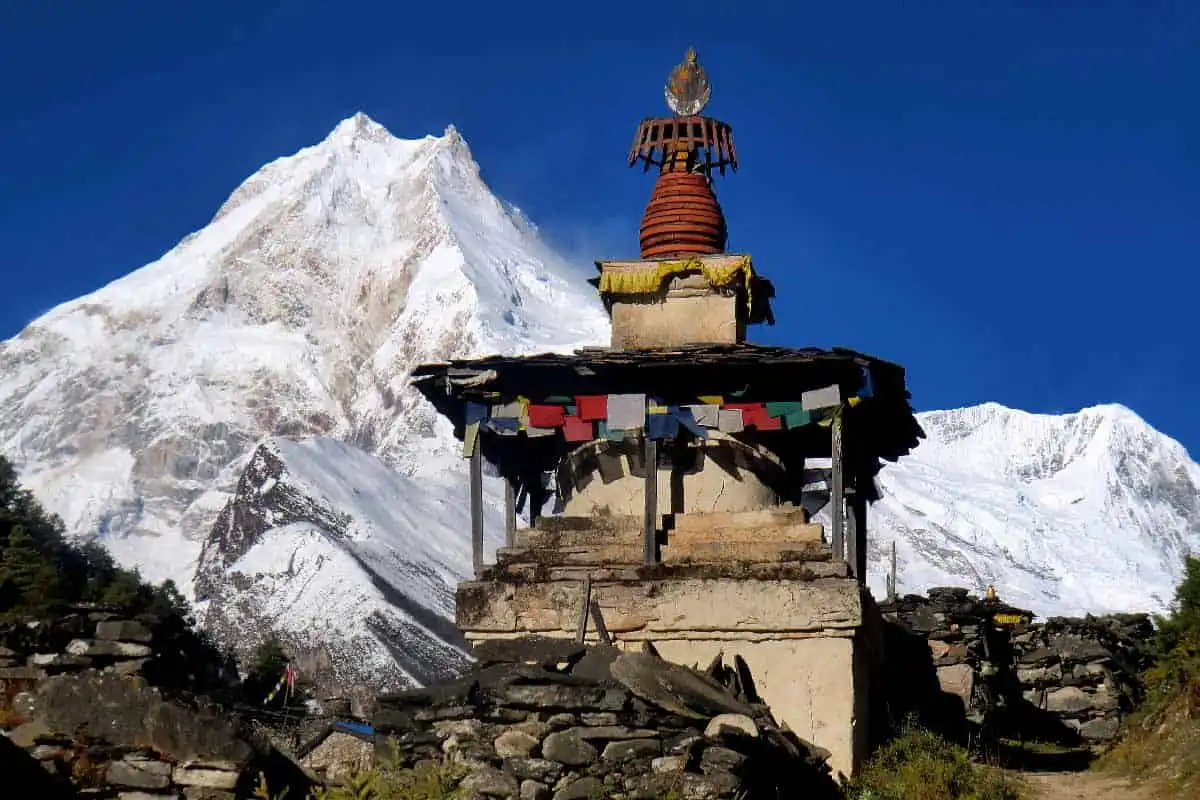
Mount Manaslu is the eighth-highest mountain in the world. Until 1992, it was closed to tourists, and today, it remains under the Nepal government's controlled tourism policy as a protected region for trekking in Nepal. Nearby, you'll find two summits of Manaslu and other surrounding ridges, including peaks like Ngadi Chuli, Himalchuli, and Bouddha Himal.
The Manaslu Circuit Trek is renowned for its breathtaking high natural Himalayas and the rich local ethnic culture it showcases. Throughout the trek, you will encounter traditional monasteries and experience the unique housing styles of the local people. The trek is often regarded as the gem of the Middle West region of Nepal, offering the possibility of teahouse trekking and allowing trekkers to enjoy the incomparable beauty and diversity of the area while having access to comfortable lodging and meals along the route.
The Manaslu Circuit Trek in western Nepal offers a diverse range of attractions and experiences, including visits to the renowned Gorkha and Manakamana Temples and proximity to the 2015 Nepal earthquake epicenter, adding historical significance. The Numbri and Tsum Valley region's unique cultural practice of not slaughtering animals makes it a compassionate and captivating destination. Additionally, trekkers can explore the old royal palace of Nepal's first king, Prithvi Narayan Shah, enriching the journey with historical context. Beyond its stunning natural beauty, the Manaslu Circuit Trek presents a rich cultural and historical tapestry for immersive exploration.
The Manaslu Circuit Trek stands out for its low visitor count compared to other popular treks, ensuring an unspoiled and exclusive experience. The Tsum Valley remains untouched by modernization, reflected in its remote housing and limited facilities, with Gumba Lundang being a fascinating monastery to explore. Along the route, trekkers encounter diverse lifestyles and cultures, from the unspoiled Bonpo religion and Brahmin lifestyle in the lower region to the distinct Gurung community in the middle parts and the Tibetan lifestyle in the upper areas. Overall, the trek offers an authentic and diverse journey, allowing trekkers to appreciate the untouched beauty and rich cultural diversity of the Manaslu region.
On May 9, 1956, Toshio Imanishi and Gyalzen Norbu, as part of a Japanese expedition team, completed the first ascent of Mount Manaslu. Following this achievement, numerous other Japanese teams have conquered the summit of Manaslu, earning it the nickname "Japanese Mountain" due to the significant number of Japanese climbers reaching their peak compared to other mountains. However, it is essential to note that Mount Manaslu is also known as the "Killer Mountain" due to the dangers posed by frequent icefalls, which have claimed the lives of several climbers attempting the ascent. The combination of its challenging terrain and icefall hazards has earned Mount Manaslu this ominous title.
Compared to other trekking passes in Nepal, Larkye La Pass is a lower elevation and a gradual-ascending trekking pass. However, it is more challenging due to the extended stretch of walking at the same elevation level rather than the typical pattern of ascending and immediately descending. Additionally, the descent toward Bhimtang is more technically demanding and almost impassable during a severe winter.
The Manaslu Circuit Trek is a challenging test of personal endurance. It involves navigating high alpine terrain and basic accommodations in higher areas. The trek includes a lengthy flat walk at a higher elevation during the Larkye La Pass crossing, then a challenging downhill slope. Additionally, there's a long side trip to the Tibetan border from Samdo and a dangerous trail to Manaslu Base Camp from Samagaon, with a potential risk of avalanches. Trekkers should be well-prepared and have prior experience to tackle these difficulties.
In conclusion, the Manaslu Circuit Trek offers a breathtaking adventure through stunning landscapes and remote areas in the Nepalese Himalayas. It provides a unique journey filled with tranquility and introspection as you immerse yourself in nature's beauty. The trek's diverse panoramas, from lush forests to rugged terrains, impact your perception of the world. Engaging with the welcoming locals adds cultural depth to the experience. However, it's essential to trek responsibly, preserve the environment, and support local communities. This trek rewards intrepid and conscious travelers with an unforgettable expedition of self-discovery and a profound appreciation for our planet's wonders.
various government, non government and tourism related organizations.


