• Nepal Adventure Trekking & Tour Operator

Upper Mustang Tiji Festival 2026

Activities
Tours and Hiking

Mustang Tiji Festival Jeep Tour 2026

The Upper Mustang Tiji Festival Jeep Tour 2026, also known as the "Mustang Tiji Festival Jeep Tour 2026" or the "Tiji Festival Jeep Tour 2026," will take place in Lo Manthang, Upper Mustang, from May 14 to May 16, 2026. During this three-day Buddhist festival, monks dressed in elaborate costumes perform ritual dances in the royal courtyard to commemorate Dorje Jono's victory over demons. The Jeep Tour departs from Kathmandu to the medieval Lo Manthang, passing through Pokhara and Jomsom. This tour of ancient sites and desert landscapes culminates in a spiritual and cultural encounter.

The Upper Mustang Tiji Festival Jeep Tour 2026 is a premier cultural and trans-Himalayan adventure, centering on the "Forbidden Kingdom" of Lo Manthang during its most sacred time of year. This year, the Tiji Festival is scheduled from 14 May to 16 May, 2026. This jeep tour allows travelers to witness the Tiji Festival, a three-day "Prayer for World Peace" commemorating the deity Dorje Jono’s victory over a destructive demon. Participants navigate the rugged, high-altitude desert terrain of the Kali Gandaki Gorge in the comfort of a robust 4WD vehicle, blending spiritual immersion with geological wonder. Participants can witness sacred masked dances performed by monks and explore ancient landmarks such as Muktinath Temple, the 8th-century Ghar Gompa, and the mysterious prehistoric "sky caves" carved into red cliffs. By opting for a jeep tour, travelers bypass strenuous trekking while moving smoothly from the subtropical landscapes of Pokhara to the windswept and Tibetan-style plateaus of Lo Manthang.

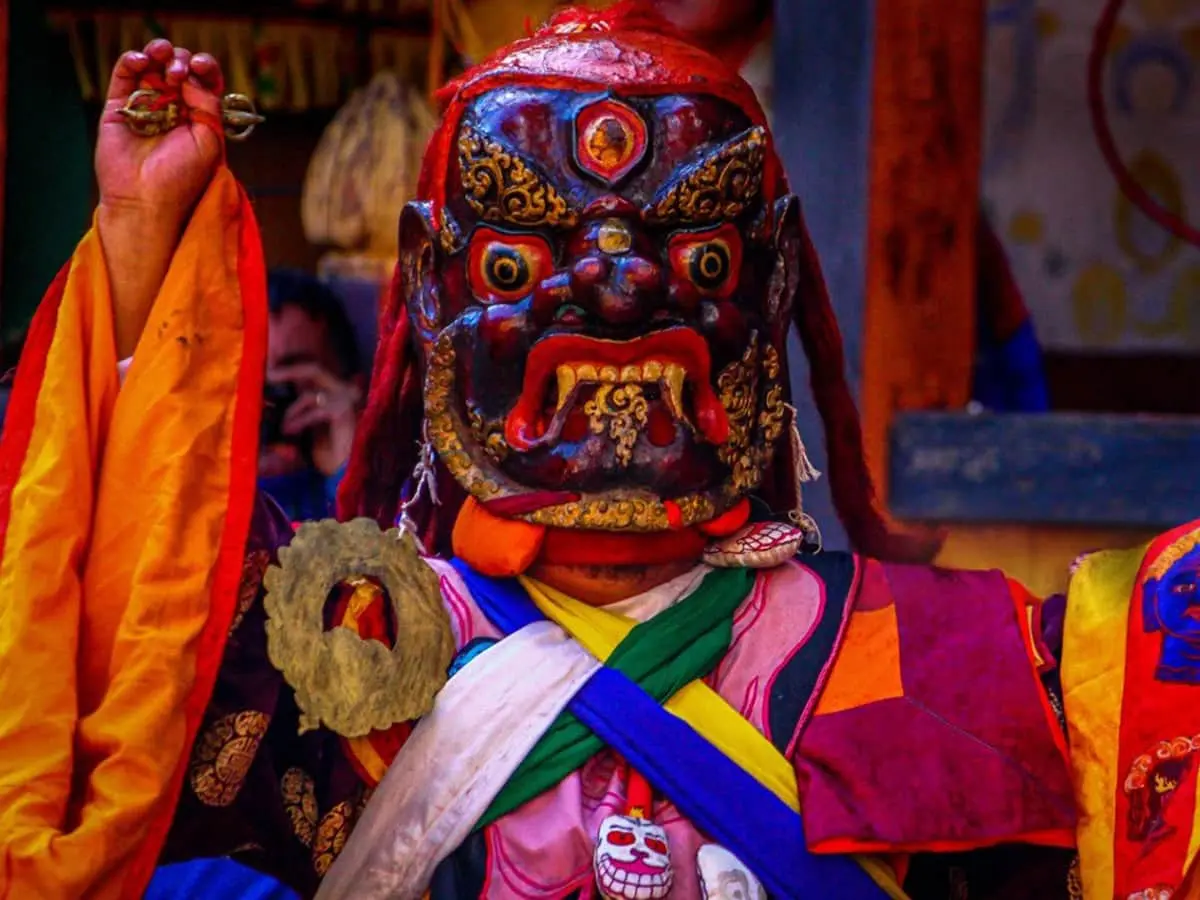
The Mustang Tiji Festival itself is a captivating blend of myth, history, and spiritual devotion, showcasing the Mustang Kingdom’s rich cultural heritage. These three days, monks of the Sakyapa sect organize intricate dances such as Tsa Chham, Nga Chham, and Rha Chham, each with unique spiritual significance. On the first day, monks recite ancient traditions and perform the graceful Tsa Chham dance against the stunning Himalayan backdrop. The second day emphasizes Nga Chham, in which dancers channel divine energies with deep spiritual intensity. The festival culminates with Rha Chham on the final day, celebrating the cosmic significance of the Mustang Kingdom. Through chants, offerings, and ceremonial rituals, the festival promotes global peace and harmony while honoring the resilience and faith of the local community.

The Upper Mustang Tiji Festival Jeep Tour provides an extraordinary journey through Upper Mustang’s remote landscapes, allowing travelers to experience desert vistas, hidden monasteries, and centuries-old villages. The tour fosters meaningful cultural exchanges, as visitors engage with the warm hospitality and traditions of the Mustang people. Beyond its scenic and cultural allure, the festival embodies the spiritual roots of Tibetan Buddhism, with rituals like the symbolic burning of effigies representing the triumph of righteousness over darkness. This immersive experience serves as both a visual spectacle and a profound cultural journey, offering a rare opportunity to witness a vibrant Himalayan heritage while exploring one of Nepal’s most isolated and sacred regions.

Upper Mustang Tiji Festival 2026

Mustang Tiji Festival Tour Highlights

Region

Mustang

Duration

15 Days

Starting Price

USD 2,700.00

Group Size

5 Pax

Activities

Tours and Hiking

Transportation

4WD Jeep

Accommodation

Hotel and Lodge

Meal Plan

AP

Trip Grade

Moderate

Max. Altitude

4,300m

Best Season

Spring

Trip Hours/Day

4-8 Hours

Competency

Physically Fit


Trip Itinerary

  • 01

    Arrival at Kathmandu (1,300m).

    Upon your arrival in Kathmandu, you'll be greeted with a warm welcome from our Ethic Himalaya representative, who will assist you with a smooth transfer to your hotel. To begin your journey on a delightful note, we've organized a special welcome dinner for you in the evening. This memorable dinner will showcase a selection of authentic Nepalese dishes, accompanied by a comforting welcome drink to immerse you in the local culture.

    Transfer: 30-45 min | Accommodation: Hotel | Meal: Welcome Dinner
  • 02

    Full day Guided Tour in Kathmandu valley with City Tour Guide

    Today, you will have the chance to discover Kathmandu alongside our knowledgeable and experienced city tour guide. Our itinerary features some incredible sites:

    • SWOYAMBHUNATH, also known as the Monkey Temple, is perched atop a hill and can be reached by climbing a long set of steps. From there, you can enjoy breathtaking panoramic views of Kathmandu.
    • BOUDHANATH STUPA is adorned with traditional Gompas adorned with vibrant prayer flags. It serves as a focal point for Sherpas and Tibetans who partake in circumambulating the stupa (koras).
    • PASHUPATINATH, a sacred Hindu temple, is situated on the banks of the Bagmati River and features ghats where cremation ceremonies take place, offering a unique glimpse into Hindu rituals.
    • KATHMANDU DURBAR SQUARE, one of the ancient capitals of the Kathmandu Valley, is a UNESCO World Heritage Site. This vibrant square showcases a harmonious fusion of Hindu and Buddhist temples, showcasing the rich cultural heritage of the region.

    With our knowledgeable guide, you will gain insights into these iconic landmarks' historical, religious, and architectural significance. Prepare to be captivated by the unique charm and spiritual ambience of Kathmandu.

    Sightseeing: 7-8 Hours | Accommodation: Hotel | Meal: Breakfast
  • 03

    By Private Transportation: Kathmandu to Pokhara (820m)

    After breakfast, we set off for Pokhara, situated 200 km west of Kathmandu and renowned for its many lakes, earning it the title "The Lake City." Our journey follows the Trishuli River until it converges with the Marsyangdi, winding through terraced fields, charming hill towns, and colorful suspension bridges, with rafters adding a lively touch to the riverside scenery. Departing early to avoid city congestion, the drive climbs to the Nagdhunga Pass before descending steep switchbacks into the lush Trishuli Valley, with a midday stop at Mugling or a riverside resort in Kurintar for a traditional Dal Bhat, where you can admire views of the Manakamana Cable Car soaring toward its hilltop shrine. Continuing along the Marsyangdi River through open valleys and terraced rice fields, the road eventually rewards travelers with a spectacular reveal of the jagged Machhapuchhre and Annapurna peaks on the horizon. We are greeted by tranquil lake views and the breathtaking Himalayan backdrop when we arrive in Pokhara's Lakeside district in the late afternoon. After settling into the hotel, you can enjoy a relaxing boat ride on Fewa Lake and wander through the city’s charming streets, ending the day savoring the beauty and experiences of this tranquil mountain escape.

    Transfer: 200 km, 6-7 hours | Accommodation: Hotel | Meal: Breakfast, Lunch
  • 04

    By 4WD Jeep: Pokhara to Tatopani (1,250m)

    After an early breakfast at the hotel, we leave Pokhara to capture the golden hour over the Annapurna Massif. We take a scenic westward drive on a paved road toward Beni, with a beautiful detour through the slate-roofed village of Dhampus, which provides front-row views of Machhapuchhre and Annapurna South. After a short stop in Nayapul, the starting and ending point for the Annapurna Trek, the drive continues along the roaring Modi Khola and onward to Beni, passing terraced farmlands, traditional villages, and river valleys, with the opportunity to see dramatic suspension bridges near Kushma before arriving in Beni to clear ACAP permits and stock up on supplies. From Beni, the route follows the Kali Gandaki River upstream, gradually transitioning into a rugged yet picturesque off-road adventure through the Kali Gandaki Gorge—the world's deepest—dramatically carved between the towering peaks of Dhaulagiri I (8,167 m) and Annapurna I (8,091 m). The rewarding full-day drive culminates in the lush, tropical surroundings of Tatopani, where natural riverside hot springs provide the ideal opportunity to relax, enjoy local culture, and unwind after a day spent immersed in ever-changing mountain scenery.

    Transfer: 110 km, 5-6 Hours | Accommodation: Lodge | Meal: Breakfast, Lunch, Dinner
  • 05

    By 4WD Jeep: Tatopani – Muktinath (3,800m) - Kagbeni (2,850m)

    After breakfast, an early departure from Tatopani begins a dramatic day of driving as the road climbs steeply along cliffside routes, pausing at the thundering Rupse Chhahara waterfall before entering the world's deepest gorge between the 8,000-meter giants Annapurna I and Dhaulagiri. As the subtropical landscape gives way to alpine pine forests around Ghasa and Kalopani, the journey opens into the wide, windswept Kali Gandaki riverbed, with time to explore the charming whitewashed village of Marpha, known for its apple farms and vibrant local culture, before continuing to the bustling hub of Jomsom. The route then ascends into a high-altitude, Tibetan-like landscape, passing through the traditional village of Jharkot before arriving at the sacred Muktinath Temple (3,800 m), where pilgrims can visit the revered complex of 108 water taps dedicated to Lord Vishnu and witness the natural flame of Jal Devi. You can also visit the nearby Buddhist monastery in Jharkot, which offers breathtaking views of Dhaulagiri, Nilgiri, and Tukuche Peak, before descending to Kagbeni for an overnight stay amidst the stark beauty and spiritual atmosphere of the Himalayan highlands.

    Transfer: 95 km, 5-6 hours | Altitude Gain: 2,950 m | Altitude Loss: 500 m | Accommodation: Lodge | Meal: Breakfast, Lunch, Dinner
  • 06

    By 4WD Jeep: Kagbeni – Syangboche Pass (4,200m) - Ghami (3,520m)

    After breakfast, you will visit the Kagbeni Monastery and Buddhist School while your guide arranges the Upper Mustang Restricted Area Permit. The high-altitude drive continues along the Kali Gandaki River toward Chhusang, where towering red organ-pipe cliffs and ancient sky caves dominate the skyline, before crossing a steel bridge into Chele's steep ridges. The journey continues over the Taklam La and Dajori La passes, which provide panoramic views of Nilgiri, with stops at the lush oasis of Samar and the tiny settlement of Bhena as the route winds through increasingly rugged gorges. Crossing the high plateau of Syangboche and the 3,850m Yamda La Pass, you'll arrive in the striking village of Ghami, known for Nepal's longest Mani wall and vibrant green fields against a stark desert backdrop. Along the way, you'll pass through Chele, Samar, Syangboche, Bhena, and Ghiling, immersing yourself in Upper Mustang's distinct culture and natural beauty while keeping an eye out for hydration and the powerful "Mustang Wind," which can stir up dust in these vast high-altitude landscapes.

    Transfer: 32 km, 3-4 Hours | Altitude Gain: 2,230 m | Altitude Loss: 1,560 m | Accommodation: Lodge | Meal: Breakfast, Lunch, Dinner
  • 07

    By 4WD Jeep: Ghami – Lo-Manthang (3,840m)

    After an early breakfast in Ghami, your journey begins with a drive past the region's longest Mani wall before continuing to the striking red cliffs of Dhakmar, where local legend says the earth was stained by the blood of a vanquished demoness. From there, you'll climb toward the Mui La pass, stopping at Ghar Gumba, one of the world's oldest Tibetan Buddhist monasteries, built in the eighth century. Then you'll descend into the old capital of Tsarang to see its massive white fortress and gompa on the side of a canyon. The final stretch takes you across a high-altitude desert plateau to the Lo La pass, offering a breathtaking first view of the walled city of Lo-Manthang rising like an oasis from the barren landscape, where you will pass through the ancient gateway and explore some of Mustang's most important landmarks. During your journey, you can see domestic yaks and cattle caravans, take in the breathtaking mountain vistas from the passes, visit the local Buddhist school, appreciate traditional arts, see the king's palace, and participate in the vibrant local activities in Lo-Manthang.

    Transfer: 24 km, 4-5 Hours | Altitude Gain: 1,250 m | Altitude Loss: 990 m | Accommodation: Lodge | Meal: Breakfast, Lunch, Dinner
  • 08

    1st Day of Tiji Festival Celebration in LO-MANTHANG.

    The first day of the Tiji Festival begins with a quiet morning of private Vajrakila prayers at Chhode Monastery to empower the performers. The village of Lo-Manthang bustles as locals dressed in traditional chubas prepare the palace square, while many visitors seize the opportunity to visit the ancient Chhoser Caves. The public celebration begins in the afternoon at Tashi Gephel Palace with the sacred unfurling of a 400-year-old silk Thangka, which is believed to cleanse the valley of negative energy. The Tsowo, who has spent months in retreat, leads the monks in colorful silk brocade and "Black Hats" as they perform the Tsa Cham dance to the deep resonance of Dungchen horns and rhythmic cymbals filling the air. This meditative performance of 52 graceful steps serves to "tame" the ground and summon the deities, formally setting the spiritual stage for the upcoming ritual battle. Throughout the day, visitors can enjoy lively dances and festivities, such as horse racing and a giant tug-of-war. At the same time, the vibrant atmosphere is enriched by Tibetan women's colorful traditional clothing and jewelry, monks' robes, and dancers' intricate costumes, making the Tiji Festival an unforgettable and truly immersive cultural experience. 

    Accommodation: Lodge | Meal: Breakfast, Lunch, Dinner
  • 09

    2nd Day Tiji Festival Celebration in LO-MANTHANG.

    The second day of the Tiji Festival begins with a morning of cultural immersion, allowing visitors to explore Lo-Manthang’s walled city and its ancient Thubchen and Jampa monasteries to admire meticulously preserved 15th-century murals or observe the royal family preparing for the day’s ceremonies at the palace. Families from all over Mustang come together in the tiny lanes to share butter tea, bringing the village to life and weaving a colorful social tapestry before the afternoon's public rituals change the mood. Known as the Nga Cham, the second day’s dances are far more aggressive and energetic, featuring monks in animal-headed masks representing protector deities tasked with cornering the demon. The presence of female Dakinis and the growing crowd indicate that the forces of Dharma are winning the legendary battle, while the dancers use ritual swords, bows, and arrows to symbolically destroy ego and ignorance, as the King of Mustang watches from his balcony. Visitors can witness this lively ceremony by Tibetan lamas, which aims to ward off malevolent spirits and involves a large turnout of locals participating in the purification and renewal rituals. A day that combines spiritual ritual, cultural richness, and immersive local life can be completed by exploring the city's quaint courtyards and alleyways after the ceremony or by renting a horse to tour neighboring villages.

    Accommodation: Lodge | Meal: Breakfast, Lunch, Dinner
  • 10

    Last Day of the Tiji Festival celebration.

    The final day of the Tiji Festival begins with a sense of high-stakes preparation as the lead dancer, or Tsowo, performs secret inner meditations at Chhode Monastery to harness the power required to destroy the demon's influence, while the palace square fills with villagers seeking blessings on this spiritually charged morning. The ritual culminates in the afternoon when a dancer representing Dorje Jono symbolically slays a tsampa effigy of the demon Ma Tam Ru Ta, causing a massive, raucous procession of monks, villagers, and the King of Mustang out of the city gates. The demon's remains are cast into the desert to expel drought and misfortune from the kingdom, and the grand exorcism concludes with a celebratory return to Lo-Manthang, where the air lightens with collective relief as the sacred Thangka is rolled up, marking the triumph of Dharma and the restoration of peace for the coming year. Following the festival, visitors can take a walk up to Namgyal Gompa, a monastery perched on a hilltop that also serves as a local court, before exploring Tingkhar, the last village northwest of Lo-Manthang, and returning to the city in the evening to continue enjoying the festival's final festivities.

    Accommodation: Lodge | Meal: Breakfast, Lunch, Dinner
  • 11

    By 4WD Jeep: Lo-Manthang – Jomsom (2,743m)

    After breakfast in Lo-Manthang, the drive begins with a climb over the Lo La pass for a final panoramic view of the "Plain of Aspiration" before descending into the medieval charm of Tsarang, which features a massive white fortress and a canyon-side monastery. The journey becomes more technical as you cross the Syangboche La and arrive at the green oasis of Samar, before plunging into deep gorges and navigating steep switchbacks to the ancient gateway of Kagbeni. After checking out of the restricted area at the police station and exploring Kagbeni's mud-brick labyrinth, the day concludes with a notoriously windy and bumpy drive across the expansive Kali Gandaki riverbed, arriving in Jomsom late afternoon. Along the way, passing through local villages offers knowledge about the region's traditional lifestyles, while Buddhist stupas and monasteries add a spiritual and architectural dimension to the journey. When you arrive in Jomsom, you can explore the vibrant local market, participate in daily village life, and discover unique cultural treasures, making this scenic drive an enriching experience that seamlessly blends breathtaking landscapes with a deep appreciation for the region's heritage.

    Transfer: 50 km, 7-8 hours | Altitude Gain: 2,320 m | Altitude Loss: 3,400 m | Accommodation: Lodge | Meal: Breakfast, Lunch, Dinner
  • 12

    By Domestic Flight: Jomsom to Pokhara (820m)

    Your day starts with a 20-minute flight from Jomsom to Pokhara in the early morning. The Twin Otter plane makes its way through the narrow space between the tall Annapurna and Dhaulagiri massifs before landing in the warmer, greener valley. As soon as you land at the airport, you'll be taken to the Lakeside district. After a well-earned hot shower at your hotel, you have the whole day to rest and recover from the rough conditions in Upper Mustang. You can take a walk along the shores of Phewa Lake, look around the lively bookstores and coffee shops in the area, or row a brightly colored boat out to the Tal Barahi Temple on its quiet island. Many travelers also get a professional trekker's massage to relax before ending the day with dinner by the lake and watching the sun go down while they watch the famous reflection of Machhapuchhre dance on the water. During the day, the beautiful mountain views and lush surroundings provide a peaceful backdrop. You can also visit nearby natural attractions like Mahendra Cave, David's Fall, and the area's charming lakes, which will help you relax and recharge after your Upper Mustang adventure. 

    Flight duration: 20 min    |  Accommodation: Hotel l Meal: Breakfast, Lunch
  • 13

    By Private Transportation: Pokhara to Kathmandu

    After breakfast, we say goodbye to the charming lake city of Pokhara and set off on a picturesque drive to Kathmandu along the scenic Prithvi Highway, which winds alongside the Marsyangdi and Trishuli Rivers through terraced hills and riverside villages. Departing early at 7:00 AM to beat the valley traffic, the first few hours offer views of rolling green hills and the famous junction at Mugling, where the route continues alongside the turquoise waters of the Trishuli, known for its white-water rafting and suspension bridges. A midday stop at Malekhu provides a chance to enjoy fresh river fish before the road begins its steady climb, offering final glimpses of the Ganesh Himal and Langtang ranges on clear days. The drive reaches its climax at the Nagdhunga Pass, where the countryside gives way to a sweeping view of the Kathmandu Valley, followed by a final drive through the city’s vibrant streets to reach your hotel in the heart of the capital. Upon arrival, the remainder of the day is free to relax, recharge, or explore the lively markets for souvenirs, making the trip a perfect transition from scenic landscapes to the bustling energy of Kathmandu.  

    Distance: 200 km l Transfer Duration: 6-7 Hrs l Accommodation: Hotel l Meal: Breakfast, Lunch
  • 14

    Free day in Kathmandu for self-visit and shopping

    Today, we have some free time to explore Kathmandu at our own pace. You might want to spend the day shopping for souvenirs, wandering through the vibrant streets and bazaars, or trying out the local cuisine. There are also popular tourist spots to visit, like Bhaktapur and Patan, which showcase Nepal's rich cultural and historical heritage. If you're feeling adventurous, you could go hiking, biking, or try some adventure sports, or simply unwind at one of the city's many spas and wellness centers. Whatever you choose, be sure to soak in the unique sights, sounds, and flavors of this amazing city.

    Accommodation: Hotel l Meal: Breakfast
  • 15

    Transfer to Kathmandu International Airport for departure

    Today, we will make our way to Kathmandu International Airport for our departure. After enjoying a hearty breakfast at the hotel, we will gather our belongings and head to the airport. We’ll arrive on time to take care of all the necessary formalities before boarding our flight. Before we say goodbye to this beautiful country, take a moment to soak in the stunning views of the Himalayas and appreciate the warm hospitality and kindness of the Nepalese people. This wraps up our tour, and we hope you had a memorable and enjoyable experience in Nepal.

    Transfer 25-30 min | Meal: Breakfast
Included in package cost
  • Airport Pick-Up and Drop: Private transportation will be arranged for your airport transfers before and after the trek.
  • Hotel Accommodation: You will have a total of 4 nights in Kathmandu and 2 nights in Pokhara, staying in a twin-sharing room on a Bed and Breakfast (BB) plan.
  • A warm welcome dinner at a typical and authentic Nepalese kitchen with a cultural dance.
  • City Cultural Tour: Enjoy a guided City Tour in Kathmandu with an experienced City Tour Guide, and all entrance and monument fees are included.
  • Transportation: Private 4WD Jeep Pokhara to Lo-Manthang and Lo-Manthang to Jomsom (5 Pax on one Jeep) accompanied by Trekking Guide.
  • Domestic flight: Jomsom to Pokhara accompanied by Guide.
  • Meals during Mustang Jeep Tour: Breakfast, Lunch, and Dinner will be provided during the Manaslu Trek.
  • Accommodation during the Trek: The best available tea-house or lodge accommodation is in twin-sharing rooms during the trek.
  • Trekking Staff: well-experienced English-speaking Trekking Guide including his/her daily allowances, meals, and accommodation, will be provided.
  • Insurance: Accidental and medical insurance is available to our Nepalese team members.
  • Trekking Permits: Special permit for Mustang, Annapurna Conservation Area Project (ACAP) Entry Permit fee and TIMS card.
  • Taxes and Service Charges: All government-applicable taxes and the travel agency service charge are included in the package.
Not included in package
  • Lunch and dinner in Kathmandu and Pokhara: The cost of meals during your stay in Kathmandu and Pokhara is not included in the package. You will need to cover these expenses on your own.
  • Rescue/emergency and insurance cost: While accidental and medical insurance for the Nepalese staff is included, your personal rescue and emergency insurance are not covered in the package. It's essential to have proper insurance to cover any unforeseen situations during the trek.
  • Beverages, hard drinks, and alcohol: The package does not include the cost of beverages, alcoholic drinks, or any other personal refreshments.
  • Nepal entry visa fee and airport tax during departure: The visa fee for entering Nepal and any applicable airport taxes during departure is not part of the package. You'll need to arrange and pay for the entry visa and any airport taxes as required.
  • Personal equipment and personal expenses: You are responsible for providing your trekking equipment and any other personal expenses not mentioned in the package.
  • Tips: While tips for the trekking staff are at your discretion, it is customary to offer gratuities as a token of appreciation for their services.
  • Extra charges due to natural calamities: The trekkers themselves are responsible for covering any additional costs resulting from unanticipated events like political unrest, flight cancellations due to weather, landslides, or other natural calamities.

Trip Map

Photo Gallery

The Tiji Festival Tour is a three-day annual celebration that takes place in the remote Mustang region of Nepal, especially in the walled city of Lo Manthang. This festival, which is deeply rooted in Tibetan Buddhism, honors the legend of Dorje Jono, a deity who vanquished an evil demon that threatened the area. The event features lively masked dances, chants, and rituals performed by monks, all symbolizing the victory of good over evil.

The Mustang Tiji Festival serves not only as a spiritual occasion but also as a cultural gathering for the local community. It strengthens their faith, preserves age-old traditions, and fosters social harmony, drawing travelers eager to immerse themselves in its distinctive cultural and spiritual atmosphere.

The Tiji Festival in 2026 is to be held around "May 14–16, 2026", though the exact dates depend on the Tibetan lunar calendar. It's recommended to confirm the dates before finalizing travel plans.

The duration of the Mustang Tiji Festival Tour is typically 14 to 18 days, including travel to and from Kathmandu, trekking in the Upper Mustang region, and attending the three-day Tiji Festival in Lo Manthang.

The Mustang Tiji Festival Tour is regarded as "moderate to challenging" in terms of difficulty. Although it doesn't necessitate technical climbing skills, trekkers will navigate high altitudes (reaching up to 4,200 meters/13,800 feet) with considerable elevation gain, uneven terrain, and extended walking days. Adequate acclimatization, strong physical fitness, and thorough preparation are crucial for a successful and enjoyable trekking experience.

For the Mustang Tiji Festival Tour, it is essential to have the right gear to ensure your comfort, safety, and enjoyment throughout the journey. Here is a list of essential gear you should consider packing:

Clothing:

  • Base Layers: Moisture-wicking and quick-drying long-sleeved tops and bottoms to provide insulation and regulate body temperature.
  • Insulating Layers: Fleece jackets or down jackets to provide warmth in cold conditions.
  • Waterproof Jacket: A waterproof and breathable jacket to protect against rain, wind, and snow.
  • Trekking Pants: Lightweight, quick-drying pants with zip-off options for versatility.
  • Hiking Shorts: Comfortable shorts for warmer days or lower altitudes.
  • Thermal Underwear: Extra layer of thermal tops and bottoms for colder conditions.
  • Trekking Socks: Moisture-wicking, comfortable, and thick socks to keep your feet dry and prevent blisters.
  • Headwear: Sun hat, beanie or warm hat, and a buff or neck gaiter for protection against the sun, wind, and cold.
  • Footwear:
    • Trekking Boots: Sturdy and waterproof boots with ankle support for comfortable and safe trekking. Trekking Sandals: Optional for wearing around the lodges during rest days or for lower-altitude walks.
    • Backpack:
      • Daypack: A comfortable and durable backpack with a capacity of around 20-30 liters for carrying your essential items during the trek.
      • Sleeping Gear:
        • Sleeping Bag: A warm and lightweight sleeping bag suitable for temperatures down to freezing or lower, depending on the season.
        • Trekking Equipment:
          • Trekking Poles: Adjustable and lightweight trekking poles to provide stability and support during the trek.
          • Headlamp: A headlamp with extra batteries for visibility during early morning starts or in case of power outages.
          • Water Bottle: Reusable water bottles or a hydration bladder to stay hydrated throughout the trek.
          • Accessories:
            • Sunglasses: UV-protective sunglasses to shield your eyes from the strong sunlight at high altitudes. Sunscreen: High SPF sunscreen protects your skin from intense sun rays.
            • First Aid Kit: A basic medical kit including bandages, antiseptic cream, painkillers, and any necessary personal medications.
            • Toiletries: Travel-sized toiletries including soap, shampoo, toothpaste, and a small towel.
            • Electronics: Camera, extra batteries, power bank, and charging cables.
            • It's important to note that the gear requirements may vary depending on the season and your personal preferences. It's advisable to check with your trekking company or travel agency for a detailed gear list specific to the Upper Mustang Tiji Festival Trek, as they may have additional recommendations or requirements. Additionally, it's recommended to pack light and bring only the essentials to avoid carrying excessive weight during the trek.

Yes, travel insurance is highly recommended and often required for the Mustang Tiji Festival Tour. It is essential to have comprehensive travel insurance that covers trekking at high altitudes, including medical emergencies and evacuation. Here are some key aspects to consider when choosing travel insurance for the Tiji Festival Tour:

  • Medical Coverage: Ensure that your travel insurance provides coverage for high-altitude trekking and any potential medical emergencies that may arise during the trek. This includes coverage for altitude sickness, accidents, injuries, and emergency medical evacuation by helicopter if necessary.
  • Trip Cancellation and Interruption: Look for insurance that offers coverage in case of trip cancellation or interruption due to unforeseen circumstances, such as illness, injury, or natural disasters.
  • Evacuation Coverage: Verify that your insurance covers emergency helicopter evacuation from high altitudes, as this can be necessary in case of severe altitude sickness or other medical emergencies.
  • Baggage and Gear Coverage: Consider insurance that provides coverage for lost, stolen, or damaged baggage and trekking gear, as well as any additional equipment you may be carrying.
  • Personal Liability: Check if the insurance includes personal liability coverage in case of accidental damage or injury to others during the trek.
  • It is important to carefully review the terms and conditions of the travel insurance policy to ensure it meets your specific needs and provides adequate coverage for the Upper Mustang Tiji Festival Tour. Be sure to disclose any pre-existing medical conditions to the insurance provider and understand any exclusions or limitations in the policy. Remember to carry a copy of your travel insurance policy and emergency contact information with you during the tour.

Altitude sickness can indeed be a concern during the Mustang Tiji Festival Tour, given that the elevations vary from 2,800 m in Jomsom to more than 3,800 m in Lo Manthang. To reduce the risk, it's important to acclimatize properly, stay hydrated, and ascend gradually.

Solo trekking in the Mustang Tiji Festival Tour is not permitted because the area is restricted. You are required to travel with a licensed guide and be part of a group or go through a registered trekking agency. Trekking alone can be difficult due to altitude and weather conditions, so it's essential to be physically fit and well-prepared. Additionally, solo travelers should be mindful of the cultural aspects of the region and make sure to respect local customs.

The weather in May during the Tiji Festival in the Mustang region of Nepal is usually quite pleasant. Days are mild and sunny, with temperatures between 12°C and 20°C (54°F to 68°F), while nights can be cooler, dropping to about 5°C (41°F). Since May is in the pre-monsoon season, the region tends to be dry, making it perfect for outdoor celebrations and trekking.

Vegetarian meals are indeed available on the Mustang Tiji Festival Tour. Numerous trekking companies provide a range of vegetarian options, including traditional Nepali cuisine, to cater to different dietary preferences. It's advisable to notify your trekking agency ahead of time regarding any specific dietary restrictions you may have.

Ethic Himalaya Treks & Expedition (P). Ltd. is committed to providing outstanding services to ensure you have an unforgettable journey. We prioritize honesty and hard work, aiming to make your experience as smooth and enjoyable as possible. All services will be delivered as promised during the booking process, following our policies and those established by the Tourism Authority. However, it's important to recognize the inherent risks involved, and you must take responsibility for your actions and participation. The adventure may involve extreme conditions, unpredictable weather, and changes to the itinerary that are beyond our control. Proper acclimatization to high altitudes is essential. Our trips often occur in remote areas where access to emergency services and medical facilities can be limited. In the event of a serious injury that requires hospitalization, evacuation may take several days, which could impact your recovery. While helicopters are typically used for evacuation, their availability may be affected by weather conditions. We cannot be held liable for any changes or cancellations due to factors such as government restrictions, natural disasters, political unrest, flight cancellations, delays, illness, accidents, or vehicle breakdowns. Any additional costs incurred will be the client's responsibility. Therefore, we strongly recommend obtaining travel insurance that covers cancellation, curtailment, personal liability, and loss of luggage and personal belongings. Proof of travel insurance is required on the first day of your trip, and without it, you will not be able to participate.

Certified by the Government of Nepal and fluent in English, our Trekking Guide from Ethic Himalaya will be with you from the moment you arrive in Kathmandu until your departure. He plays a crucial role in ensuring the success of your journey and has the authority to guide its direction. We encourage you to interact with him by asking questions and, most importantly, by following his expert advice.

  • Sirdar (Sardar): The Sirdar is in charge of the whole team. Starting as a porter and moving up to roles like kitchen assistant or even cook, the team holds a deep respect for Sirdar's leadership.

You travel on foot with a light backpack that holds your essential items for the day, such as a water bottle, camera, and protective clothing. The rest of your gear is transported by jeep to your next accommodation. You can leave your belongings at the hotel in Kathmandu and collect them when you return from your trek.

Upon your arrival at the hotel in Kathmandu, you will receive a sturdy travel bag made of thick canvas. You can pack your belongings into this bag and leave your larger suitcase at the hotel. While the bag is somewhat waterproof, it's advisable to organize your items in plastic bags or waterproof sub-bags for added protection.

In Nepal, the traditional national dish is Dal Bhat, which consists of lentil rice served with white rice, lentil soup (dal), and is accompanied by spicy vegetables and meat. We provide food services for breakfast, lunch, and dinner, along with occasional tea breaks. The meals are designed to be simple to meet your preferences and ensure satisfaction. Before you leave Kathmandu, consider packing some 'trail munchies' for extra snacks during your travels. Nepal boasts a wide variety of foods, and we aim to offer an authentic culinary experience while keeping local limitations in mind. Your guide will collaborate with the kitchen teams or local cooks to create menus that allow you to sample different dishes at various price points. We highly recommend trying Dal Bhat to enjoy the traditional Nepali flavor and enhance your culinary journey.

  • Breakfast: Start your day with the traditional "morning tea" paired with Tibetan bread, toast, chapati, pancakes, and a variety of egg dishes. Sometimes, you might also enjoy muesli or porridge.
  • Lunch: Depending on the trail's progress, you can enjoy either a cold picnic-style meal or a hot one. The main course features choices such as stir-fried rice with vegetables, pasta, potatoes, curry, and a variety of vegetables. You can also have tea or coffee.
  • Afternoon Snack: When you arrive at your daily destination around 4-5 pm, you'll find a snack of cookies and tea waiting for you.
  • Dinner: Dinner is usually served in the early evening, typically between 6:30 p.m. and 7 p.m. The meal includes a soup or starter, a warm dish such as dal bhat, pasta, potatoes, or vegetables, and a dessert. Tea or coffee is served alongside the meal.
  • Beverages: Each person is served two cups of tea or coffee with every meal. You can request more cups and other drinks as you wish. Please note that drinking water during trekking days and for extra meals will incur an additional charge.
  • Special Circumstances: For particularly tough treks or when navigating difficult passes, breakfasts might be simplified because of early starts. In these situations, energy-packed snacks are essential. It's a good idea to bring energy bars, dried fruits, nuts, or chocolate from your home country, or you can find them in Kathmandu.
  • Dietary Considerations: If you have any dietary preferences, restrictions, or allergies, please let us know when you book your trip. Our field teams will do their best to meet your needs, but keep in mind that local limitations may impact the variety of alternative menus available. For trips that require a lot of energy, it's a good idea to bring extra supplies like energy bars, dried fruits, and chocolates to make sure you get enough calories.

During the trek, tea and coffee will be served with meals. However, soft drinks and alcoholic beverages, including mineral water, are not included and must be provided by the participants. You can refill your water containers at the lodges, but it's essential to treat the water with purifying tablets to make sure it's safe to drink. To minimize plastic waste, please refrain from purchasing bottled water and choose treated water available in the villages instead. This approach helps us tackle the problem of plastic bottles and encourages responsible environmental practices throughout the trek.

Transportation in the Kathmandu Valley is organized through private vehicles, customized based on the size of your group. During trekking days, we offer a 4WD jeep to transport your luggage. Please keep in mind that each Jeep will accommodate up to 7 people, including the guide and driver.

  • Transfers: Airport pick-up and drop-by private vehicle.
  • Private 4WD Jeep:Traveling from Kathmandu to Lo-Manthang and back involves a 6-seater Jeep that offers a basic level of comfort for the journey. The Jeeps are quite spartan in their amenities. Typically, they feature several seats facing forward towards the road, along with two seats in the back that face each other, parallel to the road.

We would like to remind everyone about the importance of wearing seat belts in all vehicles during the trip, including both front and rear seats where they are provided, in accordance with the laws of the country we are visiting. By joining this trip, you agree to follow this safety guideline. Please note that Ethic Himalaya cannot be held liable for any injuries or damages that may occur if this safety measure is not followed.

In Kathmandu, you'll stay in three-star hotels that offer cozy double rooms equipped with good amenities at a fair price. These hotels typically feature essential facilities like en-suite bathrooms, air conditioning or fans, TV, and Wi-Fi access. Moreover, they might include on-site restaurants that serve a variety of local and international dishes, as well as additional amenities such as rooftop terraces, business centers, or small fitness areas.

During the trek in the Mustang region, the lodges provide a basic and rustic level of comfort, which contrasts with the more developed accommodations found in the Annapurna region due to its higher tourist traffic. The lodge rooms in Mustang often lack heating because of their remote location and limited fuel resources, making a good sleeping bag crucial for a comfortable night’s sleep. Sanitary facilities are quite basic, with showers available for a fee and usually only lukewarm due to solar heating. Above 3,000 m, you can request hot water basins to save energy. Some lodges may not have electricity, but those that do typically offer battery charging and limited Wi-Fi for an additional charge. On the last night before the pass, if the lodges are fully booked, camping in a tent is the most rustic option, which means no showers and a dirt floor. Lodge owners usually don’t take reservations for single rooms, so being flexible is important. Make sure to pack essential items like a sleeping bag and light sandals to enhance your trekking experience in the Mustang region.

Clients must notify the Company in writing about any medical conditions, physical challenges, or other mental and physical issues that may impact their ability to travel, as well as any pre-existing medical conditions at the time of booking. If the Client fails to inform the Company of these conditions, resulting in a cancellation, they will be responsible for 100% of the cancellation fees.

Trekking in Nepal requires long hours of walking each day, typically between 3 to 10 hours, and occasionally extending to 8 to 12 hours when crossing high passes. To get ready for this physically challenging adventure, Ethic Himalaya Treks suggests that you engage in daily walking or jogging for about 12 km for at least three months before your trek in Nepal. This preparation is crucial for handling the difficulties posed by high-altitude environments and remote locations over extended durations.

To have a successful and enjoyable trekking experience in Nepal, it's essential for participants to have strong willpower, the ability to endure tough conditions, a high level of fitness, and good health. Participants are responsible for covering their own medical and evacuation costs. It's important to consult a doctor regarding necessary vaccinations and other medical needs before the trip. Furthermore, Ethic Himalaya has the right to ask for a medical certificate before finalizing the trek booking. Being well-prepared both physically and medically is key to ensuring a safe and rewarding journey through the stunning landscapes of Nepal.

Travel insurance is a mandatory requirement for all travelers and should be secured at the time of booking. The policy must cover personal accidents, death, medical expenses, and emergency repatriation, with a suggested minimum coverage of USD 200,000 for each category. It should also encompass accidents, injuries, illnesses, and related medical expenses, including pre-existing conditions, as well as emergency repatriation services like helicopter rescue and air ambulance if necessary. Personal liability coverage is also advisable. The Company recommends including coverage for trip cancellation, curtailment, loss of luggage, and personal belongings. Travelers are required to carry proof of insurance and present it if requested by company staff or suppliers. Not providing proof of insurance when asked may lead to the cancellation or suspension of participation in the trip or specific activities, even after the trip has started, without any entitlement to a refund.

Ethic Himalaya Treks is not responsible for any injuries, health issues, emotional distress, or other factors that clients may experience during their trip. Additionally, the cost of our package does not include personal insurance coverage. Therefore, we highly recommend that clients obtain comprehensive insurance packages that cover medical emergencies and helicopter evacuations.

Trekking equipment is essential for a successful journey. Quality gear, such as moisture-wicking layers, insulating jackets, and waterproof outerwear, guarantees comfort and safety in different weather conditions..

    Clothing:
  • Moisture-wicking base layers (tops and bottoms)
  • Insulating layers (fleece or down jacket)
  • Trekking pants and/or convertible pants
  • Waterproof and windproof jacket and pants (shell)
  • Thermal socks and regular socks
  • Comfortable underwear
  • Sturdy and waterproof trekking boots or hiking shoes
  • Sandals or lightweight footwear for relaxing at lodges/camps
  • Headwear:
  • Sun hat or cap with a wide brim
  • Beanie or warm hat for cold weather
  • Buff or neck gaiter for protecting against wind and dust
  • Polarized sunglasses with UV protection
  • Handwear:
  • Lightweight gloves (for lower altitudes)
  • Warm and waterproof gloves or mittens (for higher altitudes)
  • Backpack and Daypack:
  • Reliable trekking backpack (60-80 liters) for porters to carry
  • Comfortable medium-sized daypack for your daily essentials
  • Sleeping Gear:
  • High-quality sleeping bag suitable for the trek's temperature range
  • Sleeping bag liner (optional for added warmth and hygiene)
  • Hydration and Water Purification:
  • Water bottles or hydration bladder (2 liters capacity)
  • Water purification tablets or a reliable water filter
  • Trekking Poles (optional but helpful for stability and reducing strain)
  • Personal Items:
  • Passport and necessary permits
  • Sufficient cash and cards (local currency and some USD)
  • Personal identification and travel insurance documents
  • Trekking permits and TIMS (Trekker's Information Management System) card
  • Camera with extra batteries/charger
  • Portable power bank for charging electronic devices
  • Personal toiletries (toilet paper, wet wipes, hand sanitizer)
  • Sunscreen and lip balm with SPF
  • Insect repellent
  • Personal medications and a basic first-aid kit
  • Electronics:
  • Headlamp or flashlight with extra batteries
  • Mobile phone with a local SIM card (for communication and GPS)
  • Portable charger for electronic devices
  • Trekking Map and Guidebook (if applicable)
  • Snacks and Energy Bars
  • Emergency Whistle and Multi-tool

Being well-prepared with the right gear enables adventurers to fully appreciate nature's beauty and tackle challenging trails with confidence. Always choose quality and reliability when picking your trekking equipment. Pack wisely, and take into account the weather conditions and altitude of your trek to ensure a safe and enjoyable experience. Focus on comfort and safety to enhance your trekking adventure.

Trekking members must provide copies of their passports and passport photographs for trekking permits before they arrive in Nepal. These documents can be sent via email or through a post box. Submitting these documents on time helps us process the required trekking permits ahead of your trip, making the arrangements smoother and ensuring a hassle-free start to your adventure in Nepal.

If you experience any issues or complaints during your tour, trekking, or expedition, it's important to communicate them right away to the hotelier and our company. Addressing the problem promptly is essential, as we cannot accept responsibility for any issues reported after your return home. If the issue cannot be resolved immediately, please inform us in writing within 30 days of completing your trip. Not following this procedure may affect your rights to claim us. Timely communication is crucial to ensure we can take the necessary actions and resolve any problems you encounter during your journey.

All clients are required to have a valid passport that remains valid for at least 6 months beyond their return date. You can obtain a Nepalese visa either from the Nepalese Consulate in your home country or upon arrival at Kathmandu Airport. The visa fees are as follows:

  • USD 30.00 or the equivalent in foreign currency for a 15-day Tourist Visa with Multiple Entries.
  • USD 50.00 or equivalent for a 30-day Tourist Visa with Multiple Entries.
  • USD 125.00 or equivalent for a 100-day Tourist Visa with Multiple Entries.
Visa Extension Fee
  • Tourist visa extension is done for a minimum of 15 days with USD 45 and USD 3 per day for additional days.
  • In the case of a delay of fewer than 150 days, an additional USD 5 per day is a late fine.

For most nationalities, E-Visas are available through the Government website: https://nepaliport.immigration.gov.np/on-arrival/IO01

This will be validated with your doctor, taking into account the recommendations of remount doctors, responsible for your safety during the trip. It will contain:

  • Treatment of altitude pulmonary edema (Nifedipine 20LP or Sildenafil50).
  • Treatment of altitude cerebral edema (Betamethasone).
  • Treatment of acute mountain sickness (Acetazolamide).
  • Blood thinner (aspirin).
  • Analgesic (Paracetamol).
  • Powerful analgesic (Tramadol).
  • Anti-diarrheal (Racecadotril).
  • Anti-spasmodic (Phloroglucinol).
  • Anti-emetic (Domperidone).
  • Anti-acid for heartburn.
  • Intestinal antibiotic (Metronidazole).
  • Broad-spectrum antibiotic (Azithromycin).
  • Anti-inflammatories (tablets and ointment).
  • Antitussive (in tablets).
  • Lozenges for colds and sore throats.
  • Ophthalmic healing (Vitamin A Dulcis).
  • Tick tweezers, splinter, and blister needle, tweezers, 2/3 safety pins.
  • Disinfectant wipes, adhesive dressings (various sizes), double skin, 6 cm adhesive tape, Steri-strip.
  • Anti allergic treatment and cream against itching.
  • BIA fine and sunscreen.
  • Purifying tablets for water.
  • Appropriate antimalarial treatment, antiphrastic powder, and mosquito repellent.
  • Your personal medications

If you are traveling with children, minors are subject to the same obligations as adults (visa, passport, etc.): see above.

  • Formalities for leaving county territory

To leave the territory, all minors usually residing regardless of their nationality, if they are not accompanied by a holder of parental authority, must present the following three documents:

  • Identity document: Identity card or passport according to the requirements of the country of destination.
  • Authorization to leave the territory signed by one of the parents with parental authority.
  • Photocopy of the signatory parent's identity document.

There isn't a set standard for tipping in Nepal. On the last day of your trek, when our field staff comes to pick you up from the starting point, they will say their goodbyes. Most staff will accept whatever you choose to give without counting it in front of you. Even if your guide is with you the next day, it's best to tip him along with the rest of the team. Many trekkers often feel uncertain about how much to tip, worrying they might give too little or too much. To help, we've put together some guidelines for reasonable tipping amounts that work in most situations. The expected tipping amounts can vary based on the length of the trek and its challenges. A good way to estimate is to multiply the daily rate for each position by the number of days they worked.

Daily amount per item:
  • English-speaking guide USD 3 to USD 4 per day/participant.
  • Driver USD 1 to USD 2 per day/participant.

The tipping amount mentioned above applies to group trips, not to individuals. If you're traveling alone, you might tip a little less, perhaps by a few dollars each day.

The itineraries or programs mentioned may change without prior notice due to unforeseen circumstances beyond our control, such as weather hazards, landslides, political unrest, road blockages, avalanches, sudden illness, and more. We are happy to customize the program based on our clients' interests. If a trip is canceled due to unavoidable circumstances like war, natural disasters, political unrest, or severe weather, Ethic Himalaya Treks & Expedition P. Ltd will gladly offer an alternative trip of a similar standard. We will hold your reservation for your next trip, but not for more than one year.

Before departure, if there is a significant change in the itinerary that affects at least one day in five, we will notify you as soon as we can. You will have the option to accept the change, receive a refund for the land portion of the trip only, or choose an alternative tour that we offer.

After departure, we may need to adjust the itinerary due to local conditions or unforeseen events. In these emergency cases, any extra costs for necessary changes will be your responsibility. Please note that we are not liable for any incidental expenses arising from itinerary changes, including visa fees, vaccinations, or non-refundable flight costs.

To secure your booking for the Mustang Tiji Festival Trek, a non-refundable deposit of USD 500 per person is required. Once we receive this deposit, your booking will be confirmed. If you make your booking within 30 days of the departure date, the full amount will be due at that time. The remaining balance can be paid before or upon your arrival in Nepal, or before the trip's departure. Please send the non-refundable deposit to the company or its designated agent. If the deposit amount differs from what is stated here, the company will notify you during the booking process. You can make the booking deposit via bank transfer or by using a Credit Card (Visa or MasterCard). Detailed payment instructions are available on the booking form provided.

For the Mustang Tiji Festival Trek, you can make your final payment when you arrive in Nepal. We accept several payment methods, such as bank transfer, travel checks, cash, or credit cards (Visa or MasterCard). Please be aware that all card payments, including deposits, final balances, trip extensions, and other miscellaneous purchases, incur a 4% surcharge. Therefore, if you opt to pay by card, remember to factor in this additional fee.

We reserve the right to modify our pricing rates, as indicated in our marketing materials and on our website, in certain situations or due to external factors that are beyond our control, like changes in exchange rates or government regulations. Additionally, please be aware that domestic flight fares may fluctuate as a result of rising fuel costs. We strive to provide the most up-to-date and accurate prices for our treks and tours.

After you pay the deposit, your Mustang Tiji Festival Trek will be confirmed, and the remaining balance must be settled 90 days prior to the start of the trip. If you choose to cancel your participation, the following cancellation fees will apply:

  • More than 45 days before departure: Deposit will be retained.
  • Between 45 to 31 days before arrival: 30% of the total tour price.
  • Between 30 to 14 days before arrival: 40% of the total tour price.
  • Between 14 to 09 days before arrival: 70% of the total tour price.
  • Between 08 to 02 days before arrival: 80% of the total tour price.
  • Less than 48 hours before arrival: 90% of the total tour price.

We reserve the right to cancel a trip up to 56 days before departure, as outlined in Clause 14. Additionally, we may cancel a trip before departure if it becomes impractical to carry out the planned itinerary due to circumstances such as terrorism, natural disasters, political instability, or other external factors. If we do cancel your trip, you can choose to transfer the amounts paid to a different departure date or receive a full refund. In situations where the cancellation is due to external events beyond our control, refunds will be adjusted for any costs that cannot be recovered. Please be aware that we are not responsible for any incidental expenses you may have incurred related to your booking, such as visas, vaccinations, travel insurance excess, or non-refundable flights. Different cancellation policies may apply to specific trip styles, and your booking consultant will inform you of any differences if necessary.

If you need to transfer from one trip to another or pass your booking to someone else, please let us know at least 30 days before your planned departure date. A fee of USD 200 per person will apply for each change, in addition to any extra charges from hotels, ground operators, or airlines. If you inform us less than 45 days before the departure date, the cancellation refund policy will take effect. Transfers to another person are only allowed if they meet all the trip requirements, and you can transfer to a different departure as long as it’s within the current validity period.

Any changes to other arrangements related to your trip will result in an administration fee of USD 200 for each booking modification. This fee is separate from any charges imposed by hotels, ground operators, or airlines. Please note that no changes can be made to your booking within 10 days of your departure.

The price shown on our website is for a group of 6 to 15 people for the Mustang Tiji Festival Trek. If you're interested, we can also arrange this trip as a private experience, starting with just two participants. For groups of 15 or more, we offer a significant discount, which includes the chance for one person to join the trip at no cost. We know that many clients have inquiries about their desired dates, but please note that our pricing is affected by the following factors:

  • Group Size: The cost of the trip varies based on the number of participants in the group.
  • Accommodation Tier and Budget: The selection of hotel accommodations and the budget preferences of clients play a role in determining the overall cost.
  • Customization: We're open to adjusting the trekking itinerary to suit your available time and specific requirements.
  • Extra Services: If you wish to incorporate additional services, we can discuss and mutually agree upon adjustments to the price.
  • Support Staff: The presence of Trekking Guides, Assistant Guides, and extra porters can impact the overall cost.

Please don't hesitate to contact us if you need more information or want to customize your trip to suit your preferences. Our goal is to offer a clear and adaptable pricing structure that meets your requirements.

Captcha Image
Do you think that you need a tailor made package?
Need to know more about this trip?
Ethic Himalaya is

affiliated to & recognized by

various government, non government and tourism related organizations.